Whenever she’s performing, American Ballet Theatre principal Isabella Boylston lights up the stage with a vibrant passion. Offstage, she’s a digital-media creative, brand influencer, mental health advocate, and fashion icon. Below, she shares her self-care routine and wellness advice, her toughest role, how she manages pre-performance nerves, and more.
With your busy dance schedule, how do you make time for content creation and outside campaigns and endorsements?
It’s challenging, but I try to find an hour here or there when I can shoot. It takes discipline—it’s like running a business on the side. Luckily, I’ve been able to hire a talented young dancer and gifted editor, [ABT corps member] Cy Doherty. He helps me a lot.
I don’t post as frequently as I used to, which has taken a little bit of the pressure off. Obviously, ballet is my number-one priority, so, during the season, I often “delete” social media because I want to focus. I recommend getting an app that kicks you out of Instagram and TikTok. I use Screens. You set the parameters: “I can open this app x amount of times, for x amount of minutes in a day.” It’s so easy to get into an endless scroll, so it makes a difference.
[blur-below]
You often talk about breaking ballet stereotypes and reinforce body positivity on social media. What are some ways you cultivate that positivity in your own life?
Definitely therapy and journaling. I started going to therapy during COVID because it was overwhelming. I was so anxious and had intrusive thoughts which were very disturbing. Therapy has helped me realize that your thoughts are your reality. So I try to be thoughtful about what I’m putting into my brain and think, “Is this productive? Is this helping me or hurting me?” Then I try to recalibrate and reframe.

What would you say is the stamp of your dancing?
Spontaneity, to both the music and to the people around me onstage. When you have those shows where you’re really in the moment, it’s transcendent because your conscious mind isn’t in control anymore. Fearlessness is another one. I get very nervous before shows, but as soon as the curtain goes up, I usually have a great time. Once you’re out there, things come out of you that you’ve maybe never done in the studio.
How do you calm your pre-performance nerves?
I’ve learned that the way I feel before the show is not a barometer of what’s going to happen when I get out there. You can be incredibly terrified and still deliver the most incredible performance of your life. I do a ton of journaling, make sure I’m getting the food my body needs to perform at its best, and get a good night’s sleep beforehand. I also always listen to the music before any major performance. And I need alone time onstage, so I try to go around 6 or 6:30 pm when the curtain is up so I can really feel the stage. It’s like a spiritual moment where I feel the space and get in tune with my mind and body.
What is your most challenging role, and how do you approach it?
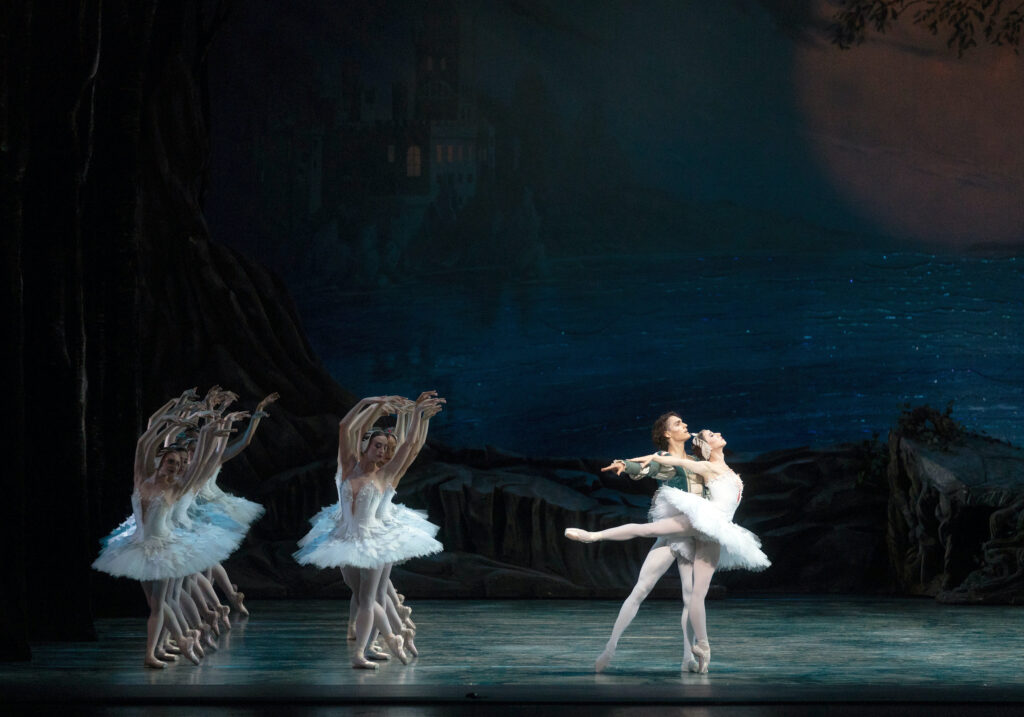
Odette/Odile from Swan Lake, both artistically and physically. There are multiple points in the ballet where I’m like, “Am I gonna make it?” But I love it because there are endless layers to uncover and so much you can play with. How creature-like is your Odette, or how womanly? I do a ton of rehearsal—first I work on the steps, and then on how I can put my emotion into the physicality. I think a lot about what Odette is thinking and feeling, and then I try to figure out how to put that into my body. All of that combined preparation is so essential. Then you can be totally free onstage.
What’s your process when learning new choreography?
It depends—it’s very different if you’re working with a choreographer to create new work versus learning a ballet that’s already been created. I find it easier to pick up material when I’m working with the choreographer directly. Also, I need the music in order to imprint muscle memory. Connecting the rhythm in my feet and my body to the music is how I learn the steps.
What is your secret talent?
I speak Swedish fluently. My mom’s Swedish and moved here when she met my dad. So I actually have dual citizenship.
If you weren’t a dancer, what would you be?
Probably in theoretical physics or something similar. I was a really good student and enjoyed school. I actually won the state science fair in middle school for a project about a beetle that sprays this liquid to stun its prey. Crazy and very niche—perhaps more niche than ballet!
How would you describe your fashion influences?
In the studio, I’ll layer a ton of clashing colors and prints, and I love following young New York designers and wearing their clothes. I don’t shy away from bright colors—both in the studio and out—and I love wearing white. For the past three galas, I’ve only worn white gowns! I gravitate towards things I can comfortably move in, but I love dressing up.
If you could have dinner with anyone in history, who would it be?
I love history and listen to a lot of history podcasts, so it’s hard to pick one person! Probably one of the 18th- or 19th-century French ballerinas, or a courtesan, would be interesting. Of course, Anna Pavlova would be thrilling, since people say she is the greatest ballerina.
What is the least glamorous part of being a dancer?
Dealing with setbacks and disappointments. I think anyone, no matter how successful they are, have had their fair share at some point.
What tactics do you use for injury-prevention?
I have torn ligaments in both ankles and an extra bone in one ankle that’s fractured, but, thankfully, my tendons are doing great. I do a ton of ice buckets—but, for me, Pilates is the best way to prevent injuries. I have the most amazing Pilates teacher, Sarah James.
What are your tips for young dancers wanting to gain more confidence onstage?
Experience is irreplaceable, so seize any opportunity to perform and be onstage. I know sometimes those opportunities are hard to come by, but if they aren’t available to you, try to creatively find a way to make an opportunity where there wasn’t one before.
How would you like to be remembered?
As someone who was nice to their colleagues, hopefully caring, and made people feel good about themselves. I’ve benefited so much from being on the receiving end of that in my career. It’s taught me the importance of the community you build around yourself as a dancer, what you get from it, and what you give back in return.
The post Striving for Spontaneity: How ABT’s Isabella Boylston Finds Freedom Onstage appeared first on Pointe Magazine.