In June of 2025, I fainted face-first while walking home. The season had just ended, and I was in the best shape of my life. I’ve always been a healthy person, so it was completely unexpected. The last thing I remember was sending a text to my girlfriend, [fellow dancer] Leah Reiter, telling her that I felt lightheaded. I woke up on the sidewalk with my front tooth knocked out, my bottom teeth chipped, and a deep tear in my upper lip. I called Leah, and we gathered that I had been passed out for four minutes.
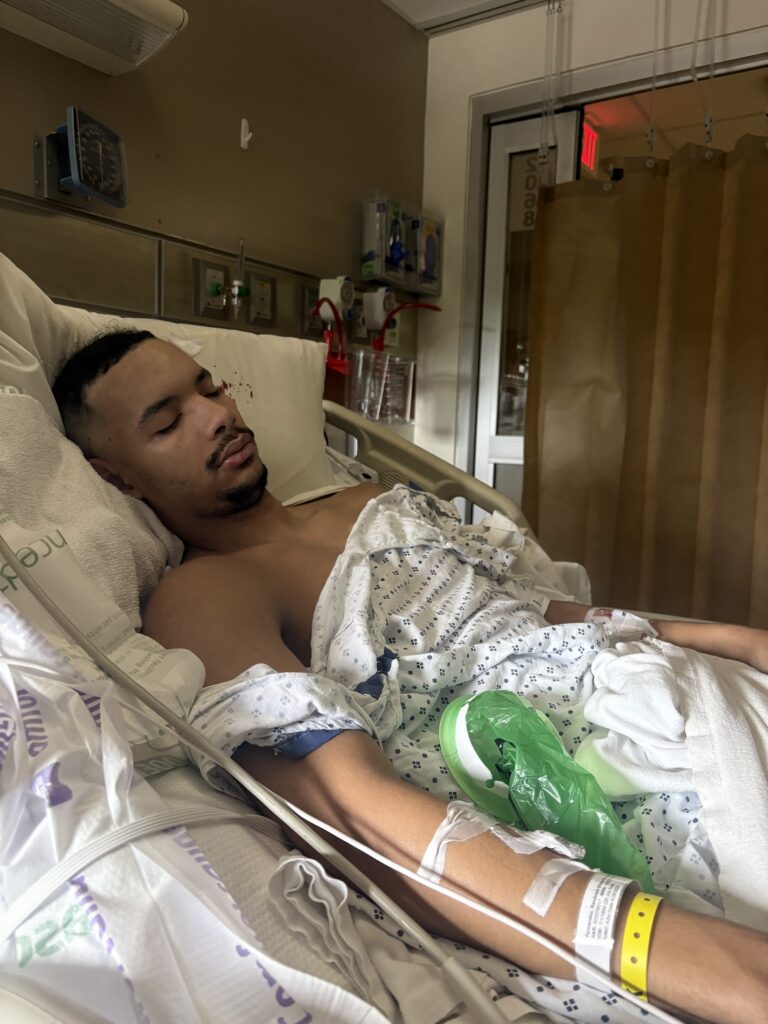
I asked her to drive me to an in-network ER because health insurance can be tricky in the off-season. Once there, I got over 20 stitches in my lip and the inside of my mouth. The doctors also scanned my head to look for a crack in my skull from the fall. They rushed back with the results, saying they’d seen something very abnormal in my scans and that I’d need to transfer to the hospital’s main campus. I was stitched up and felt fine, but the doctors insisted we take an ambulance there immediately, saying, “If you want to live another day, we need to take care of this right now.”
At University of Oklahoma Medical Center, I underwent more tests. The results showed a mass near my cerebellum blocking the area where spinal fluid is created. I stayed in the hospital for a week and a half while doctors tried to figure out if the mass had caused the fainting. They told me that it was a brain tumor and they’d need to do a spinal tap to learn more. The pain from that was the worst—I couldn’t walk or sit in a chair for about three weeks. It was difficult to go from spending my days dancing and working at a restaurant to being confined to my bed.
[blur-below]
The results of the spinal tap didn’t tell us everything we needed to know, but the tumor had to be removed regardless, since it was blocking the passage of spinal fluid. My surgery was scheduled for June 26. My mom and best friend came to support me, so I felt more at ease leading up to the date. I created a Spotfund page to provide medical updates, and the support I received was shocking. Donations from our community and beyond allowed Leah and I to focus on my recovery instead of worrying about finances.
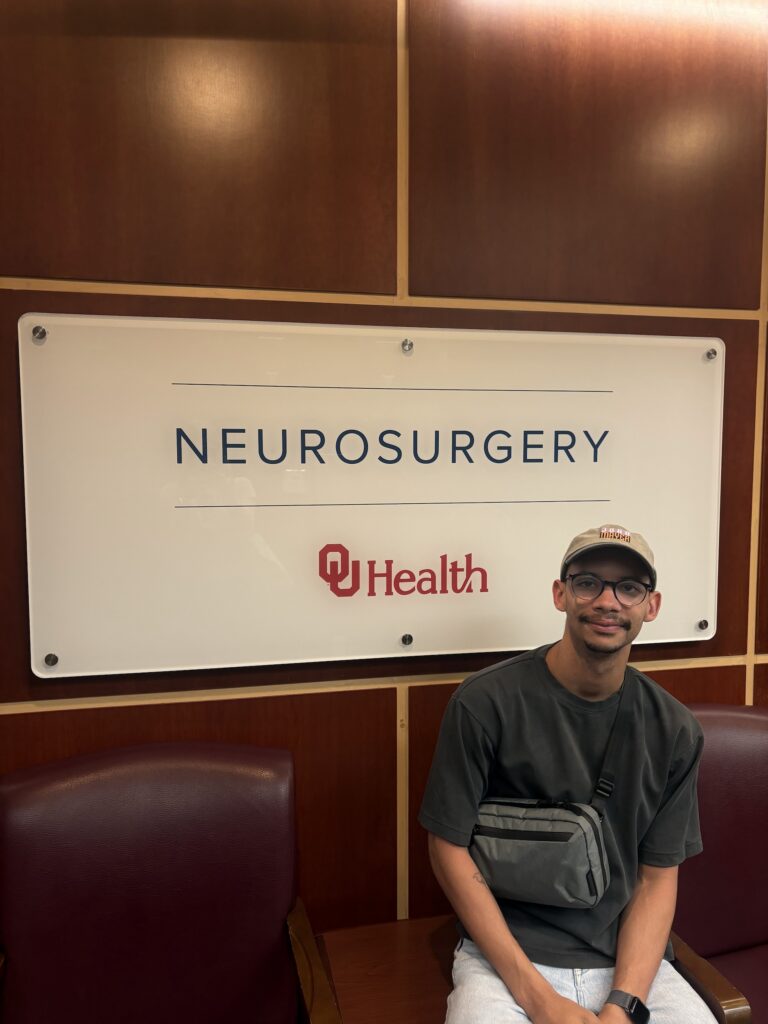
Going into surgery, I knew the parts of my brain controlling my motor functions and coordination would be at risk. Still, I found peace in the idea that I’d already lived a beautiful and fulfilling life up to that point. After surgery, my neck was so swollen that it was wider than my head, which had 18 staples in it. Fortunately, lab results showed that the tumor was fully removed, and it wasn’t considered cancerous.
As I transitioned into physical therapy in mid-July, one of the biggest challenges was explaining the dancer-specific skills I would need to regain. I had to describe concepts like spotting pirouettes and doing a cambré forward and back. Together, my physical therapists and I came up with exercises to help me recover my balance and coordination. The mind-muscle connection in my lower body was slowest to return. To engage those muscles, I had to stare at them and do exercises where I’d tense and relax repeatedly.
My artistic director and sponsor visited me at home during recovery and said to take the time I needed; they’d work with me as I eased back into dance. I’d been doing outpatient therapy for a month when OKCB’s 2025–26 season began. I started by doing barre and then assisting rehearsal directors for the rest of the day. After three weeks of barre, I began to progress through center. Jumps were the last to return because my legs were weak. I’d lost 30 pounds. To regain my strength, I was doing outpatient physical therapy, taking class, doing ballet-focused physical therapy at OKCB, and using a stationary bike at home.
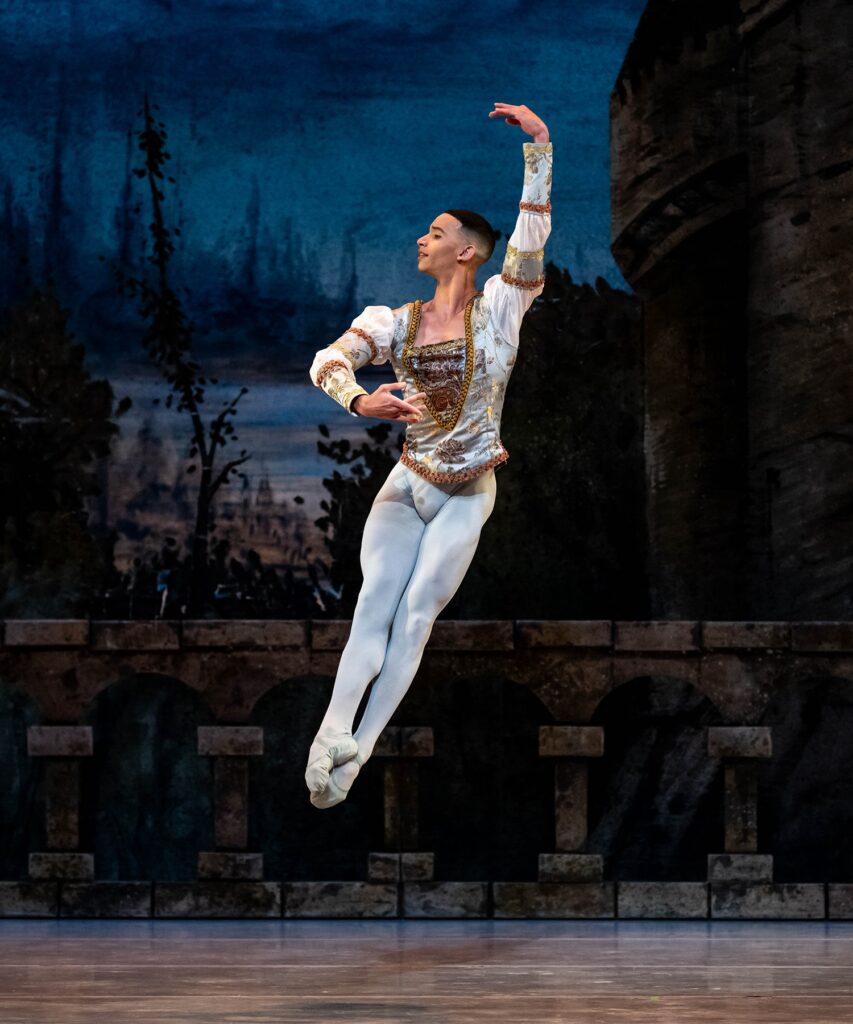
I returned to rehearsals in mid-September in the role of Dracula’s Jonathan Harker, one of the leads. I’ve been at OKCB for nine years, so the artistic staff trust me. The rehearsal process would take five to six weeks, and they encouraged me to do what I needed, even if it meant marking for five weeks. The doctors had told me I might be back onstage by December, but I felt strong enough to perform Dracula in mid-October. I invited so many people to the show, and they were screaming for me during bows. Everyone piled into my dressing room, chanting my name. I’ll never forget that moment.
After the performance, so many people told me I looked better than I had before my tumor. I think it’s because I feel so grateful. Sometimes certain movements still hurt more than they did before, but I’m just happy to be dancing fully. Doing the same thing every day can make you forget how special it is, but now I don’t take any day for granted.
The post Oklahoma City Ballet’s Randolph Fernandez Reflects on His Brain Tumor Recovery appeared first on Pointe Magazine.