In 1877, Marius Petipa’s ballet La Bayadère premiered in St. Petersburg, Russia, on the wings of an Orientalist craze sweeping Western Europe. The ballet, which tells the story of fatal romantic entanglements in an indistinct ancient India, was an immediate hit. Over the decades, it has become a fundamental piece of the classical ballet canon. But modern discussions have questioned the work’s harmful, stereotypical representation of South Asia—especially its historical use of blackface and inaccurate portrayal of Indian temple dancers, or devadasis.
Those discussions have inspired several remakes of the work in recent years. The latest, Ma Bayadère (My Bayadère), choreographed by Les Ballets de Monte-Carlo artistic director Jean-Christophe Maillot, premieres from December 27 through January 4 in Monaco’s Grimaldi Forum. In Maillot’s version, the story is reimagined through the inner workings of a ballet company.
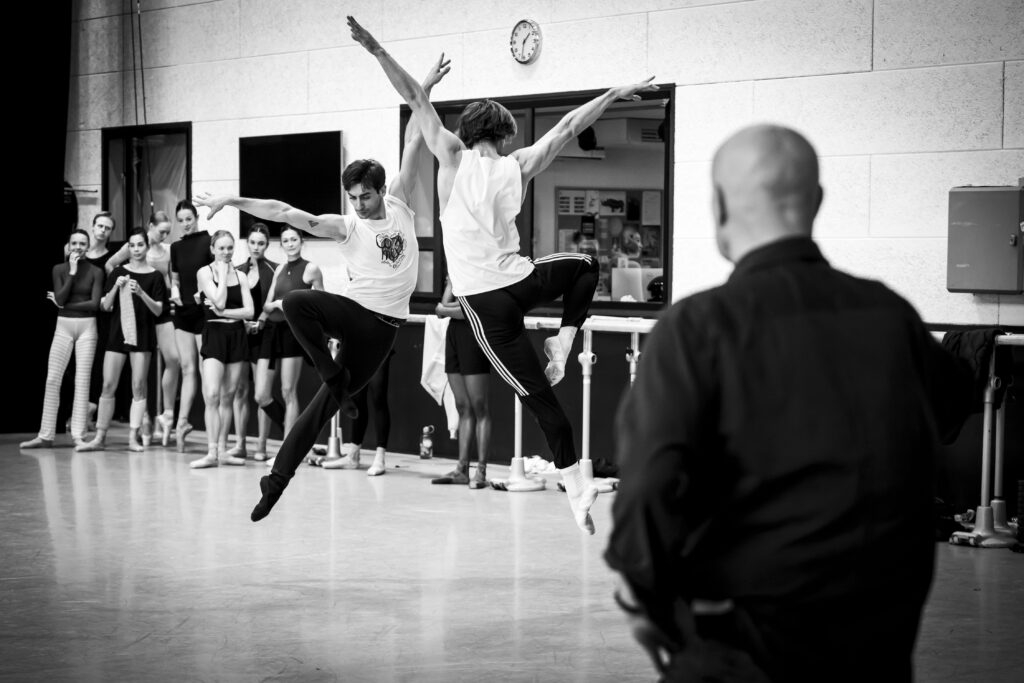
“Through Ma Bayadère, I pay tribute not only to Petipa and the repertoire he bequeathed to us,” Maillot tells Pointe, “but also to classical ballet in general—to its vocabulary on pointe that I love so much, and with which I have been in dialogue for so many years.”
Below, Maillot elaborates on his inspiration for Ma Bayadère, its creation, and its important place in his career.
When and how did the idea for Ma Bayadère come about?
La Bayadère accompanies any ballet dancer who has received academic training. For a choreographer like me, who likes to engage in dialogue with the repertoire, it was obvious that the day would come when I would want to measure myself against this peak of classical dance.

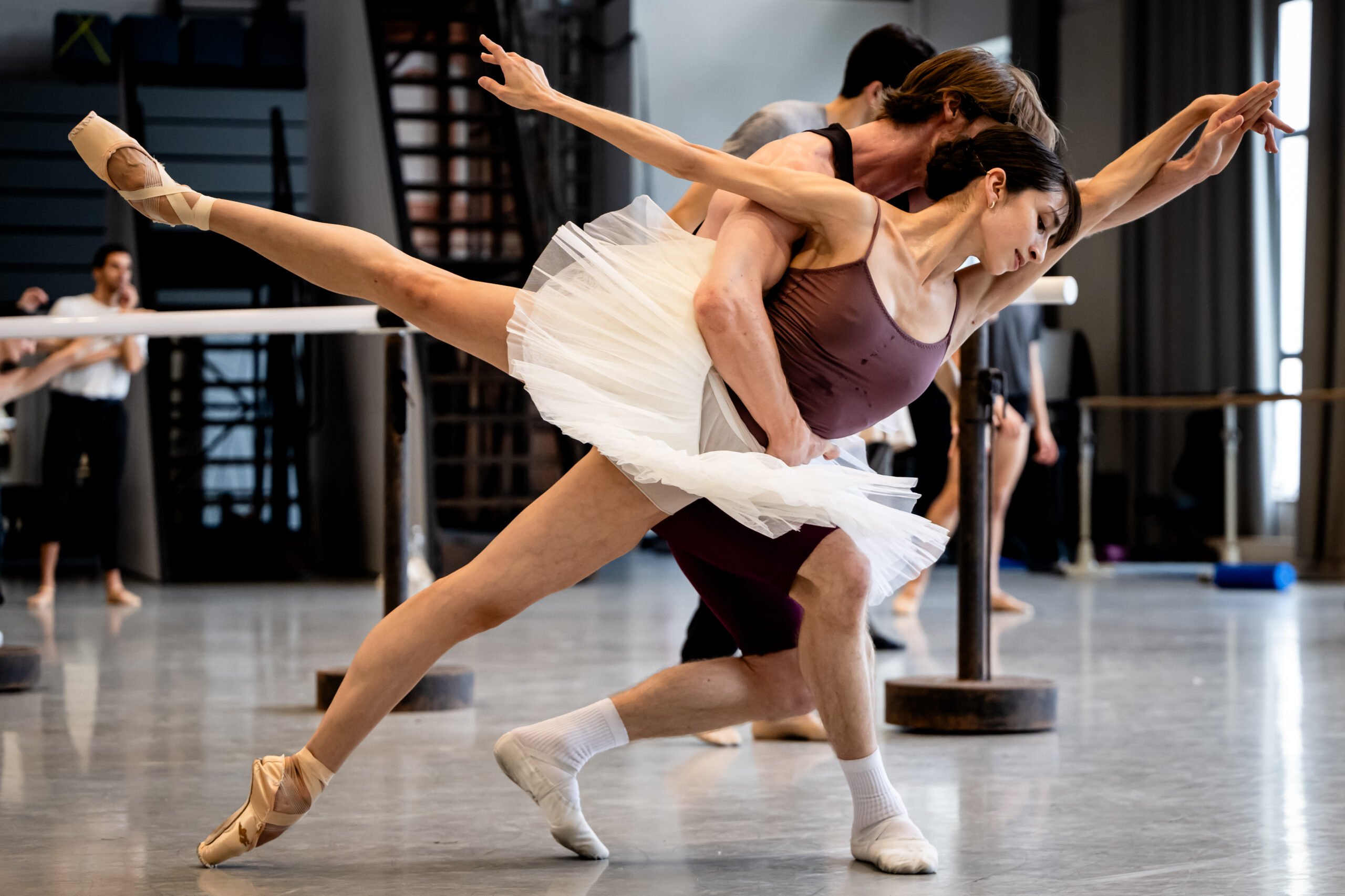
What fascinated me were the similarities between La Bayadère’s narrative plot and the life and relationships within a ballet company. In La Bayadère, there is a coercion governing the characters’ lives with the caste system. The world of dance also knows a form of hierarchy that prescribes an artist the roles they can dance according to their rank within the company.
How have you addressed the ballet’s Orientalist roots?
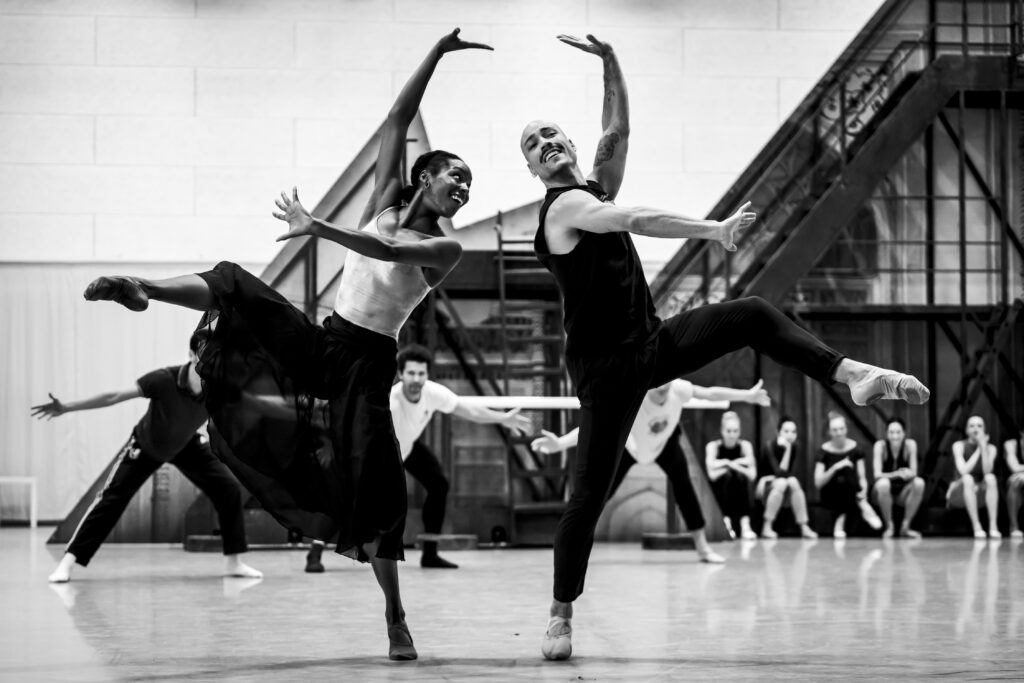
At no point did I want to explore them. They form a postcard that has long since faded, conveying clichés from another time. I only reference the original ballet because the mise-en-abyme [story within a story] that I offer needs it; my ballet tells the daily life of a dance company performing La Bayadère.

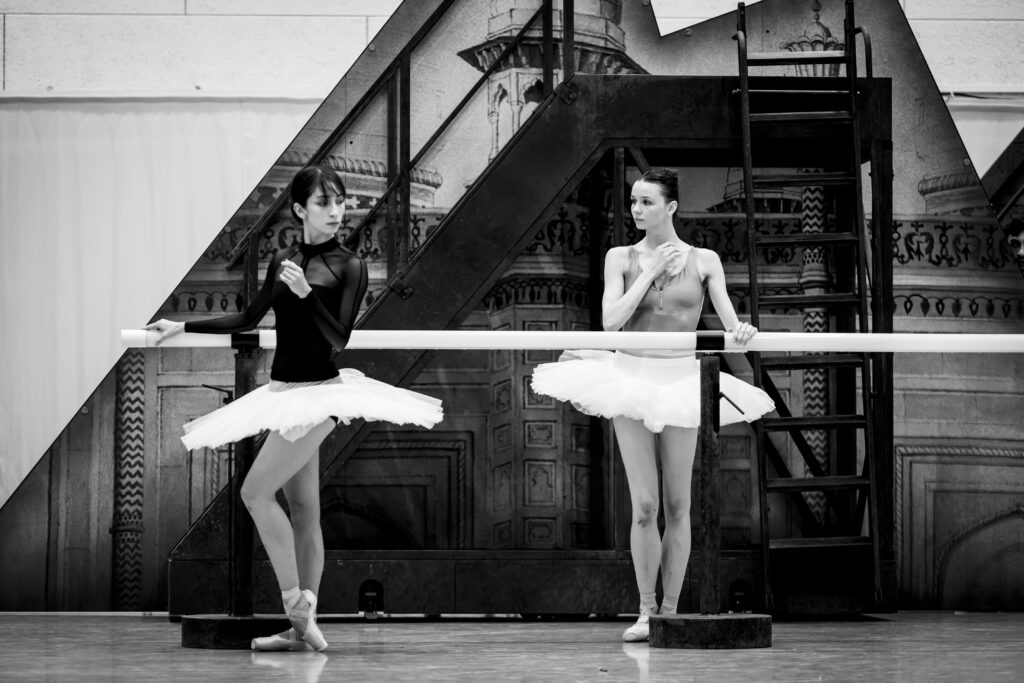
As for the parallel between the Hindu temple and the dance studio, it is based on the idea that the bayadères are sacred dancers dedicated to their temples. In their own way, the artists of Les Ballets de Monte-Carlo dedicate their lives to another temple: the dance studio. The ballet barre is our sacred fire.
How have you approached the ballet’s creation, choreographically, and in terms of its libretto (which you made in collaboration with Geoffroy Staquet)?
My creative process has not changed: putting together a classical choreographic vocabulary that’s consistent with a contemporary narrative, offering authentic emotions. I had the company’s 50 dancers permanently in the studio. A thousand and one small movements from everyday life, sometimes trivial, were thus able to feed the creative process.
I always say that a ballet is not something I can totally anticipate; it is something I will find. This is so for the dramaturgy, but especially for the choreography which is mainly the result of improvisation. The libretto should not constrain the choreography. You can write the most beautiful story, but in the end, it is always the artist’s body that has the last word.
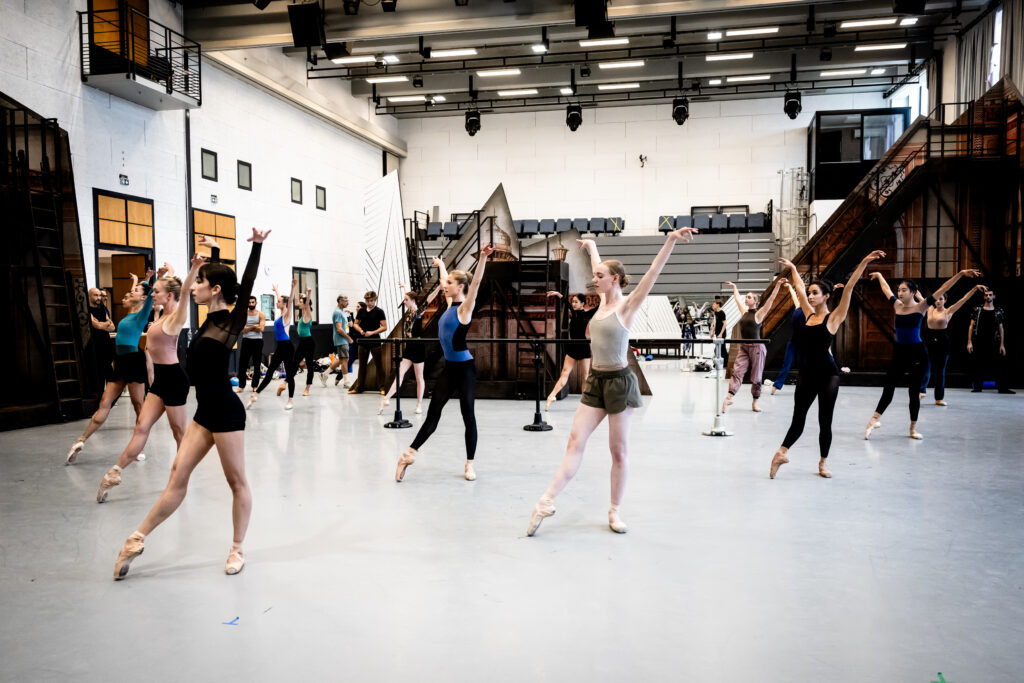
Depending on what the dancers propose, we rewrite the text, and the libretto gradually takes its final form. The dramaturgy is then used to check that the story we tell remains coherent for the audience, and that the twists and emotional peaks are placed at the right times.
How have you balanced the ballet’s historical relevance with your new approach?
As I said, Ma Bayadère is a mise-en-abyme: I tell the story of 50 artists who are performing a ballet inspired by the traditional version of La Bayadère. For years I wanted to create a choreography blending fiction and reality that would reveal the daily life of a dancer. I made sure that the artists rehearsing behind closed studio doors gradually become an overlay on the characters of the piece they are performing. They are caught in the same emotional knot as Solor, Nikiya, Gamzatti, Dugmanta, and the Great Brahmin. They relive the same conflicts within their company.
Twice, the dancers present passages from the original ballet: Nikiya’s solo in the second act and the “Danse Infernale” [aka “the Drum Dance”]. It’s something I never usually do, but this ballet required it. Ma Bayadère is aimed as much at ballet enthusiasts who know the work well (and will note how I refer to it) as it is to a novice audience.
What about the infamous dream scene?
The dream scene takes place, but it’s a different dream. I don’t want to say more.
Could you describe the ballet, visually?
The sets, costumes, and the entire scenography are at the service of two clearly defined worlds: that of the backstage of a theater and one that corresponds to the dream scene. My scenographies are most often timeless, and you never know precisely where it really happens. There is something quite universal about that.
Have you altered the music at all?
I took Léon Minkus’ music (arranged by John Lanchbery and Kevin Galiè) without altering it, but, as always, I made my own edits. The musical excerpts do not follow the original order, and for dramaturgical reasons, everything has been reduced to 90 minutes of music.
Could you speak on the possessive pronoun “ma” in the title?
I have created more than 45 ballets for Les Ballets de Monte-Carlo, and I am well aware that I will not create 45 more. I now have a summary view of my work and career; every ballet I create now is more and more personal. What I tell in this Bayadère is what I experienced as a choreographic artist for 40 years. I don’t know how to separate the work from the artist. If I did, I don’t think I would even want to do it. This ballet is probably the one in which I indulge myself most, which is why I called it Ma Bayadère.
I can’t say precisely why, but I have the feeling that with this new creation, a circle is closing.
The post Jean-Christophe Maillot’s <i>Ma Bayadère</i>, for Les Ballets de Monte-Carlo, Is Personal appeared first on Pointe Magazine.