Ingrid Silva, a leading ballerina with Dance Theatre of Harlem, is wrapping up her final season with the company she has called home for 18 years. But Silva says this is not a retirement. She juggled multiple independent projects while performing with DTH, and her post-DTH life is shaping up to be just as jam-packed—with choreography commissions scheduled into next year, and a new dancewear line in the works.
“As an artist, I’m always hungry to self-discover, and so the decision came through that,” Silva said during a recent conversation with Pointe on leaving DTH. “I felt like it was time to explore different areas.”
Silva will take a special bow at New York City Center on April 19 after appearing in William Forsythe’s Blake Works IV (The Barre Project), a piece that’s dear to Silva because she first danced it shortly after her daughter, Laura, was born. Her final performance with the company will take place while on tour in Worcester, Massachusetts, on May 9.
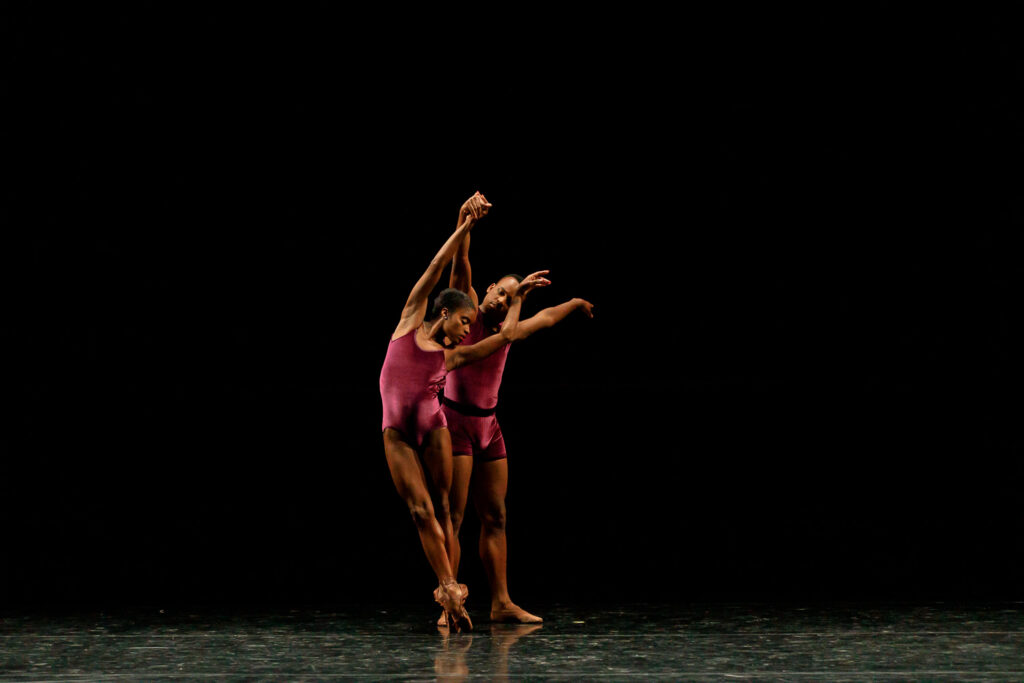
But while the conclusion of Silva’s chapter with DTH is bittersweet, her artistry onstage is just one way she’s leaving an indelible mark. During her time with the company, Silva has also served as a powerful voice both for DTH as an institution and for more diversity and inclusivity in the art form itself. She’s harnessed social media and her 659,000+ following on Instagram to advocate for more representation and opportunities for Black dancers (co-founding the collective Blacks in Ballet in the process) and has called for more support for mothers in the dance world.
[blur-below]
She’s also living that representation—becoming, in 2017, the first African Brazilian on the cover of Pointe, and making a striking statement on the cover of Vogue Brasil while pregnant in 2020. A pair of Silva’s pointe shoes, pancaked to match her skin tone before brands began offering more diverse shades, is on display at the National Museum of African American History and Culture. It’s a responsibility that Silva doesn’t take lightly.
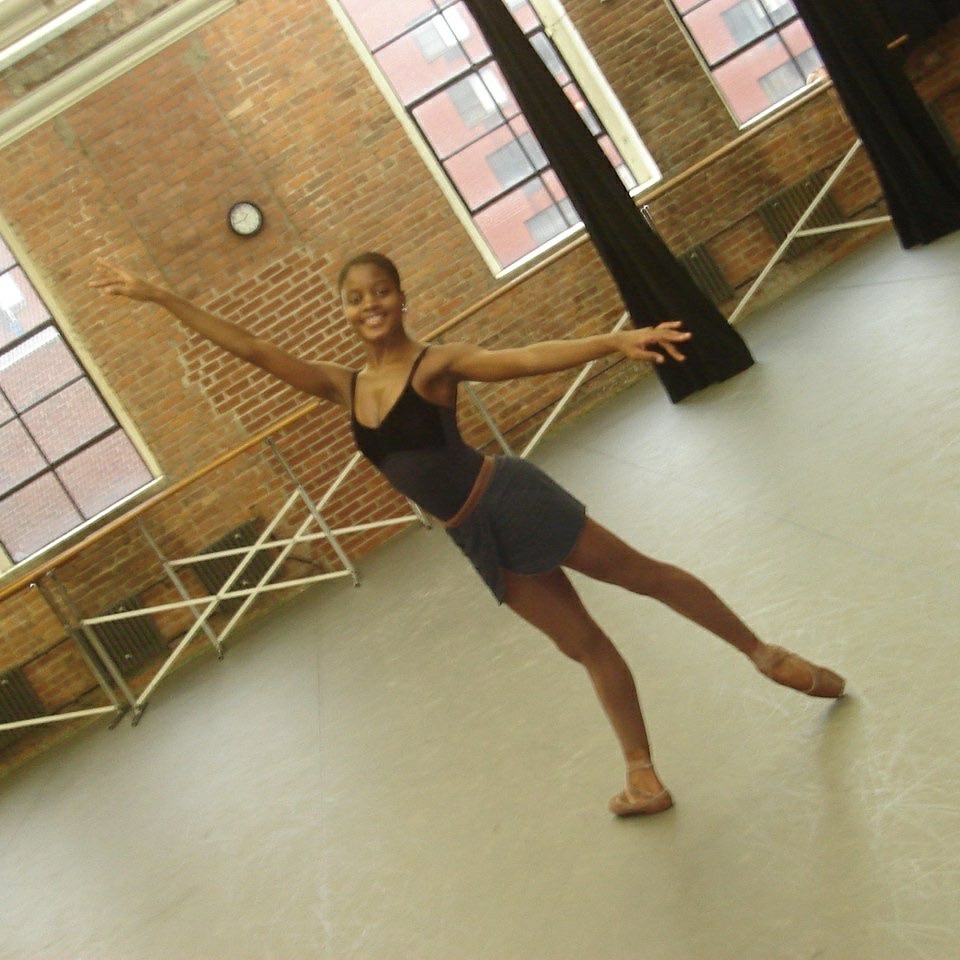
“I know this is a huge opportunity, especially as a dark-skinned woman—not just a Black woman—because dark-skinned women in ballet [are still] very rare,” Silva says. “I know my place in the space and the importance that I held for the next generation.”
Growing up in Rio de Janeiro, Brazil, Silva says, she never dreamed she’d become a ballerina. She was introduced to ballet at 8 years old when a family friend told her mom about an audition for a community dance program. “I had no dance shoes, nothing,” Silva says. “I went barefoot to the audition, and the teacher was like, ‘Oh, you are very talented. Would you be interested in joining?’ ”
Silva arrived at DTH as a summer intensive student in 2007, enrolling in the school full-time the following year. Within a few months, she was invited by founder Arthur Mitchell to dance with DTH Ensemble, the junior company that performed during DTH’s eight-year hiatus. When DTH was officially reborn in 2012, Silva joined the company.
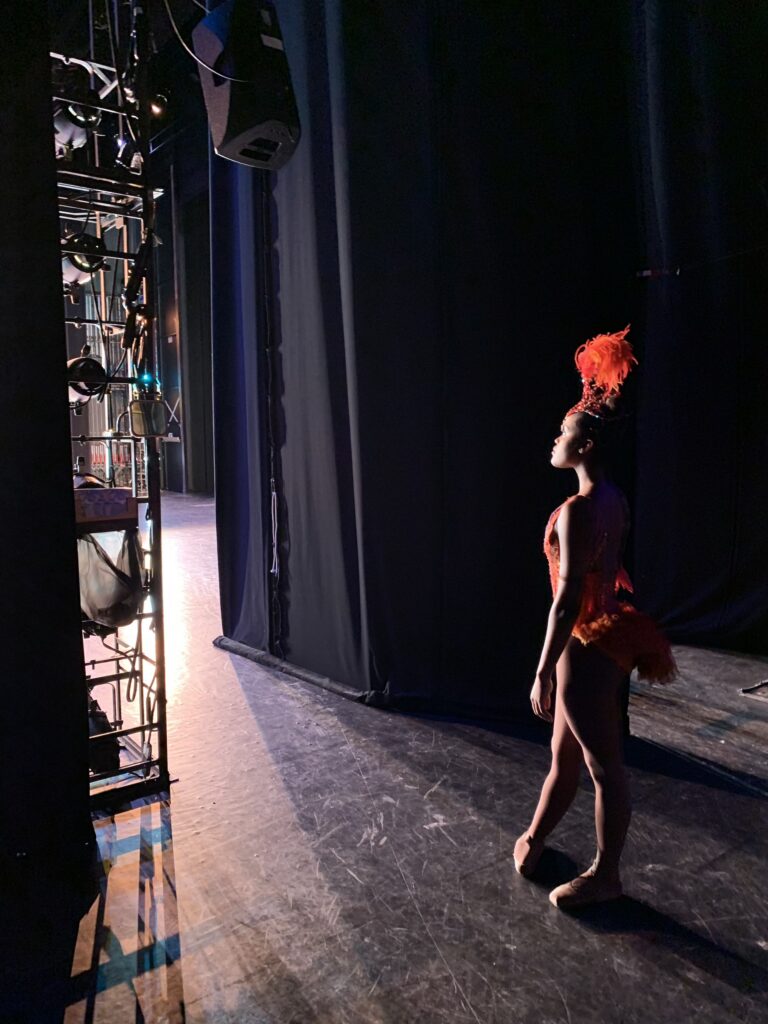
Since then, Silva says her years with DTH have brimmed with memorable moments, including touring to her native Brazil. (“We didn’t get to go to Rio, which is still my dream!”) A highlight was dancing the solo from John Taras’ Firebird for DTH’s 50th-anniversary celebrations. “When you put that costume [on] that you know is historic, it’s powerful,” Silva says of wearing the design by Geoffrey Holder. “It has the legacy of the company.”
Silva says she has thoroughly enjoyed her career with DTH, especially the opportunity to work with and be coached by legends like Mitchell and former artistic director Virginia Johnson. “But I also believed in our mission about inclusivity, about opportunity, about diversity,” Silva explains. “And I stayed because I love the institution. I believed in what Arthur Mitchell worked for.”
Silva has been stretching her choreographer muscles over the last five years, and says she plans to focus on that more. She already has a number of projects lined up after her final DTH performance, including working with Ballet West and artÉmotion’s summer intensive choreographic workshop and creating new commissions for Ballet Co.Laboratory, New Ballet (San Jose), the School of Dance at the University of Utah, and New England Ballet Theatre. Her choreography for NEBT will be performed at Ailey Citigroup Theater next year. “So people are going to get to see my work in New York, and I’m so excited for that!”
She’s also creating her own dancewear line, a passion project that has been on Silva’s to-do list for a while. “We talk about diversity a lot, but I still don’t have tights that match my skin tone. So I developed my own,” Silva says. The collection, which Silva expects to launch by early 2027, is starting with tights, but she’d eventually like to incorporate other dancewear, including flat shoes and pointe shoes.
And Silva isn’t hanging up her own ballet shoes anytime soon. She’s embracing opportunities as they come, including performing at the Dancing Under the Stars Bermuda gala in July. (She’ll be dancing in a piece of her own creation, as well as choreographing a solo for American Ballet Theatre corps member Madison Brown.)
“There’s this Drake song that says ‘Started from the bottom, now we’re here,’ and I always associate that with my journey because I did not plan any of this,” Silva says. “Hard work and perseverance led me to be at this place, [and] I don’t take for granted any day.”
The post Ingrid Silva Says Goodbye to Dance Theatre of Harlem, but the Curtain Isn’t Closing Yet appeared first on Pointe Magazine.