Through the posthumous discovery of her diaries, early-19th-century Yorkshire businesswoman Anne Lister has come to be celebrated as the “first modern lesbian.” Lister’s unapologetic approach to living life on her own terms has inspired biographies, novels, and a BBC drama series: Not only did she ceremonially marry her partner, Ann Walker, at Holy Trinity Church, York—now considered the birthplace of lesbian marriage in Britain—she also owned land and property at a time when it was rare for women. She opened her own coal mine, traveled extensively, studied science and literature, and was notorious for her unconventionally masculine, all-black wardrobe. Because of this, peers nicknamed her “Gentleman Jack” as a criticism of her behavior.
Now, Lister’s story will be told through dance with the premiere of Northern Ballet’s Gentleman Jack on March 7, ahead of a six-theater tour across the UK. A co-production with Finnish National Ballet, the ballet features choreography by Annabelle Lopez Ochoa, who, having previously explored the lives of Frida Kahlo and Coco Chanel, is no stranger to bringing the stories of complex women to the stage.
Ahead of the premiere, Pointe spoke to Lopez Ochoa about capturing Lister’s personality through movement, choreographing same-sex partnering, and more.

What makes Anne Lister a great protagonist for a ballet?
Apart from her being queer, Anne demonstrates that there are lots of types of women. She was an entrepreneur who, thanks to her intellect, quick thinking, and wit, found a way to do business in a man’s world. She traveled, studied anatomy, and climbed mountains. This unfazedness about living life the way she wanted really resonated with me. The dancer who plays Anne has one last look at the audience at the end of the ballet. I’ve told her to say to herself in her mind, “I always get what I want.” It’s a mantra I’d like to have every day.
In the BBC series Gentleman Jack, Anne is not always the most likeable character.
People can be dual. The queer community knows that Anne wasn’t the kindest person in a lot of situations, but she had this magnetic aura. The way she saw the world and answered back to men inspired even non-queer women of her times. They wished they had the courage to respond to their husbands similarly.
What sources have shaped your interpretation of her story?
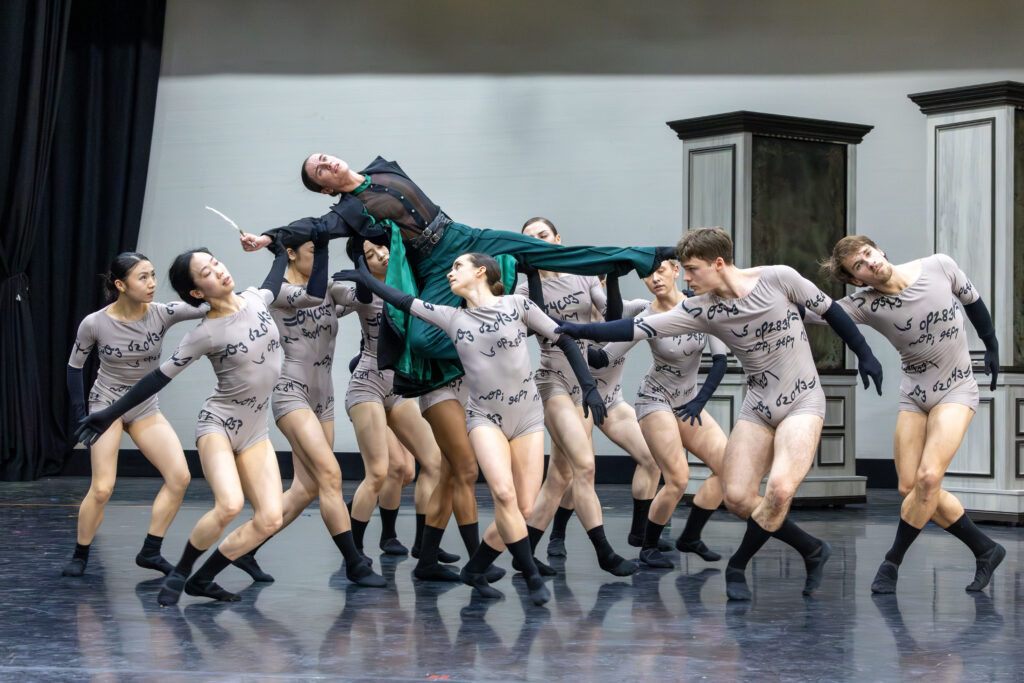
We wouldn’t know about her if she hadn’t written so much, so one of the main characters in the piece is the words from her diaries. There is a chorus of dancers who act like an ocean of words surrounding her, some of them very saucy and erotic. They wear abstract leotards with black gloves and socks that represent ink and calligraphy.
How is the ballet structured?
Anne lost the love of her life to a man and convention. That’s what we cover in the first act. In the second, she has to rebuild herself, and goes after someone who finally accepts to live with her as her wife.
For once, I didn’t want my main character to die at the end of the ballet. I wanted it to end on a positive and hopefully inspiring note for all of the queer women in the audience. I’ve had a lot of messages on Instagram from people who are coming all the way from Europe and even Canada!
The score is written by Peter Salem, a composer who you’ve worked with frequently. How does the music and set design contribute to the ballet’s mood?
Anne was always walking everywhere, taking carriages, and going to Halifax. We have some vertical TV screens with images of the environment, but in general the set is quite abstract, so we really needed to get a sense of place through the score. Peter used a lot of Yorkshire and Scottish folk sounds, combining them with ambient and electronic textures.
Tell us more about how you’ve choreographed Anne’s personality.
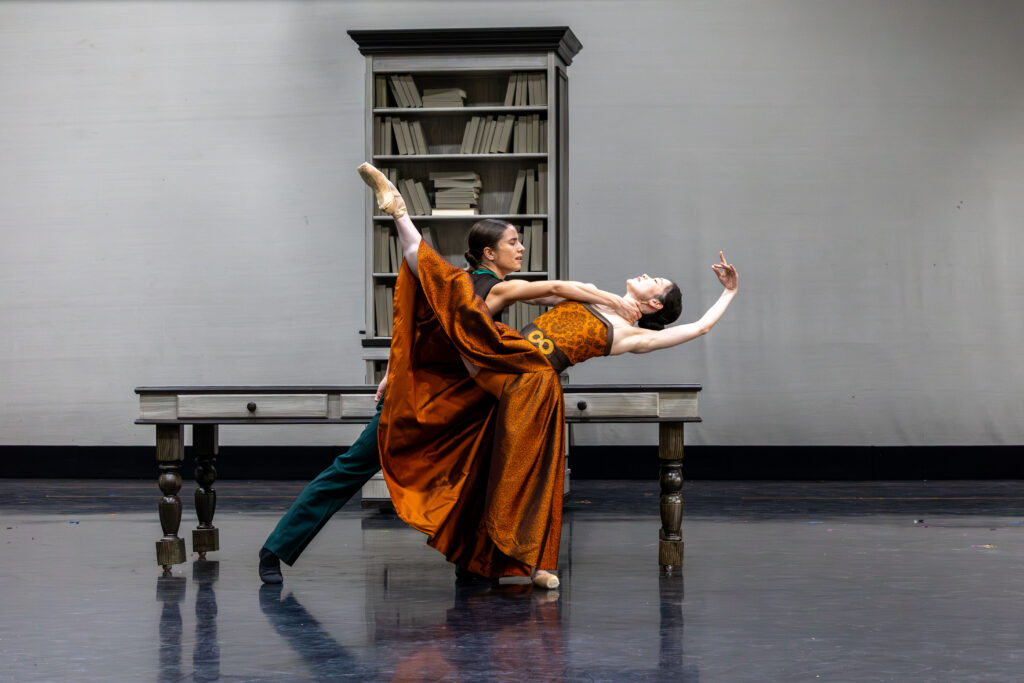
Her vernacular is more masculine, and whatever the male dancers do, she does it better. I’ve added some small, idiosyncratic movements to reflect the particularity in her diaries. She was very precise, writing things like “at 10:17, I went to the dances. At 10:34….”
I’ve worked with contemporary dancer Jemima Brown, who is queer herself and has really helped the dancers portraying Anne be more grounded and to take more space. In the ballet, Anne has a cane and does turns with it fully outstretched. At first, she holds back so she doesn’t hurt anyone. But slowly Anne realises that her entourage won’t give her space if she doesn’t take it.
You’ve worked with same-sex partnering between the female leads, too.
There are certain expectations ballet audiences have of partnering in terms of lifts. I also like very fluid choreography, but it became clear that not everything was going to be possible. In my research, I watched a queer series on Netflix called Young Royals. The director brought eroticism to the screen [through] the tension, the sweat on the lip, the averted glances…It helped me realize that I didn’t need to imitate what a mixed-gender couple would do. You don’t need a man to create erotic tension.
The post In <i>Gentleman Jack</i>, Anabelle Lopez Ochoa Brings 19th-Century Queer Icon Anne Lister to Life appeared first on Pointe Magazine.