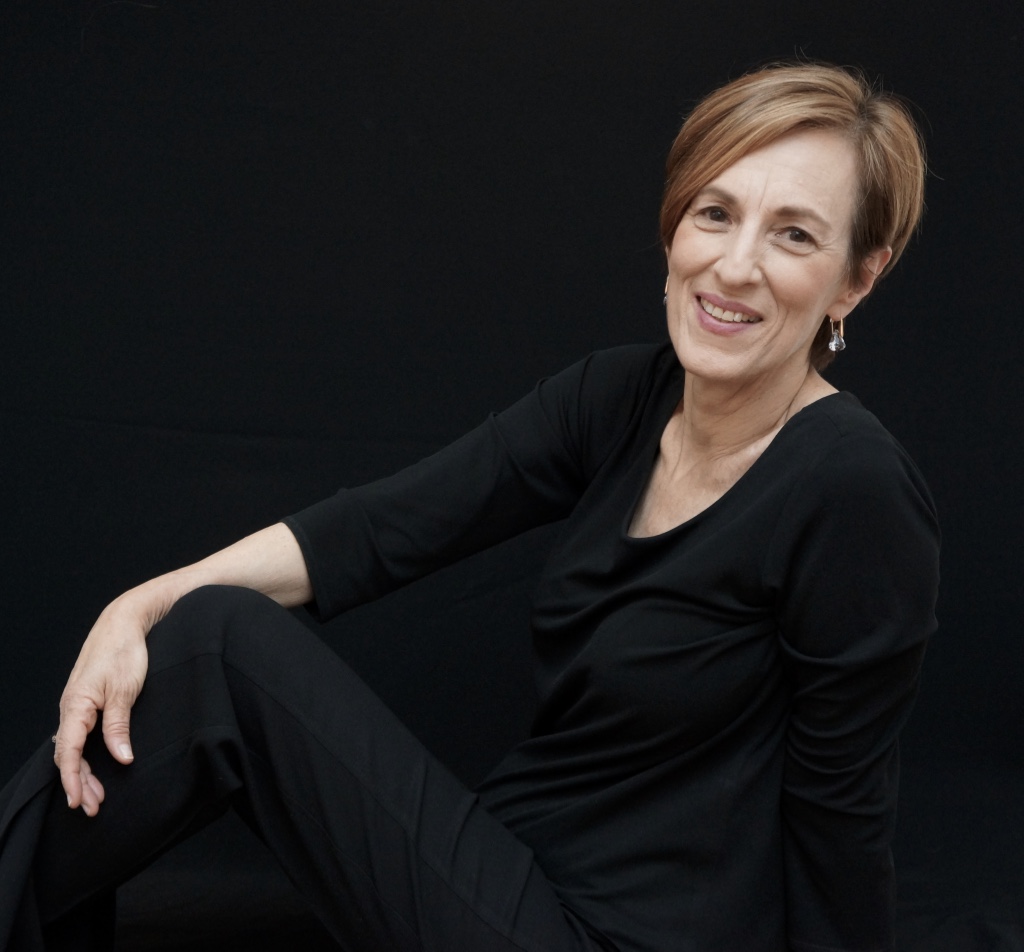
Diana Byer has decided to, as her younger students might say, “get on the apps.” Byer is the founder and former artistic director of New York Theatre Ballet and is regarded as a master teacher of the Cecchetti method. She studied for 20 years with the British ballet dancer, choreographer, and teacher Margaret Craske (1892–1990), who herself studied with the Italian ballet master Enrico Cecchetti (1850–1928). After dancing professionally and leading NYTB for 44 years, Byer stepped down from the company in 2022 but continued teaching.
In October 2024, Byer created the Diana Byer Legacy Project, a series of on-demand video lessons for dancers from elementary through professional levels. The series was created with Dancio, online-dance-lesson platform, and produced in collaboration with Jacob’s Pillow. And then by January 2025, with the help of Alex Angrist, one of her former students, Byer expanded her virtual reach by launching “Teaching Cecchetti.” The new channel is meant to educate dancers through social media (Instagram and Facebook) and online classes. The posts feature forgotten ballet steps from the 19th and early 20th century, as well as Cecchetti fundamentals.
Byer’s newest offering at the NYTB School is a Morning Advanced/Professional class, running through June 5, taught live and streamed on Zoom.
Our friends at Dance Teacher spoke to Byer about her newest endeavors and her passion for teaching.
What inspired you to launch “Teaching Cecchetti” now, and what gaps in dance education are you hoping it fills for today’s dancers and teachers?
There are so many great things up on social media right now, especially related to ballet. But it seemed to me that they were focusing on a lot of the same steps. So I thought, Wouldn’t it be interesting to show these long-lost steps that aren’t being taught much anymore? The Cecchetti syllabus is full of amazing steps that have been forgotten. I wanted to show people this wealth of vocabulary that was once in ballet.
What are some of your favorites of these long-lost steps?
Many of them involve moving the upper body in ways that you don’t see much anymore. People think ballet should be upright, but some of these steps touch the floor. Margaret Craske used to tell us our hands should be dusty by the end of class.
One favorite is pirouette with renversé. Nowadays dancers try to do as many pirouettes as possible, but this is just a double with the renversé, which means the pirouette’s not always upright. Another is jeté battement. It’s like a jeté with a back-front strike, like a frappé but with a jeté in it. Also, jeté rond de jambe going forwards and backward. I also love this advanced variation: jeté rond de jambe, petit battement, rond de jambe en dedans, jeté rond de jambe, petit battement, jeté rond de jambe. Stuff like that. There are just so many steps we can talk about!
Why do you think these steps have gotten left behind over the years?
I think they’re extremely hard to teach. Students don’t get them right in a day. So, your class is not going to look fabulous while they’re learning it. And sometimes it’s not fun. It takes time to teach these steps, but it’s worth it.
There’s a lot of talk about artistry in the Cecchetti method. What does “artistry” mean to you, and how do you help students develop it through your posts and classes?
I think artistry is on the syllabus of any good teacher, no matter the style. I don’t think it’s just in Cecchetti. The Cecchetti method’s not the only way, I just happen to love it.
One important aspect of artistry is the eyes. I talk about them a lot. That’s something Margaret Craske taught, starting with the children up into the Advanced/Professional class. How do you use your eyes? How can you draw the public into your world, and how can you push your world out to the audience? I also focus on gesture in these videos, which is another important part.
And in my classes I talk about musicality, how you have to listen to the music with your body. Dancing is not just feet and legs and turns and jumps. It’s gesture and communication, and the generosity of the movement going out to the audience.
What do you hope advanced dancers take away from engaging with “Teaching Cecchetti” and your online class offerings?
I want them to know that there’s a huge wealth of vocabulary that doesn’t always center on how you point your feet and how high your leg goes. Technique is just the beginning. That’s what Margaret Craske used to say. You need it, but it’s not the end-all because dance is an art form. These steps involve dancing. You’re bending forward, and you’re bending to the side, and you’re using the upper body. I’m hoping to light up their imagination. And I’m also hoping choreographers can see that there are so many ways of moving in ballet and be inspired.
What about dance educators?
I want teachers to recognize that there’s more vocabulary to learn and teach. They need to see it, though, because it’s unfamiliar. But there are all these wonderful ways of moving! Ballet shouldn’t be upright. Allow your dancers to use their body.
And these long-lost steps and Cecchetti fundamentals aren’t only relevant for ballet. They can be brought into any dance class, no matter the style. So many modern dancers took Margaret Craske’s classes and loved them because what she was teaching was not just classical ballet, it was dancing.
Tell me about your Morning Advanced/Professional classes.
They are held in person at the NYTB School on Mondays, Wednesdays, and Fridays from 10 to 11:45, but those who can’t be there can join through Zoom. I’m also teaching a pointe class on Thursdays 10 to 11:15. I believe pointe is a separate skill that requires training and refinement, so I like to keep it separate. All my classes focus on artistry, musicality, gesture, and skill.
When I left the company, I stopped teaching advanced classes and was focusing on children. While I love working with young dancers, I missed the advanced classes. So it’s been fun for me to get back to it. I just love teaching.
This session goes through the first week in June, but if there’s interest, I hope to continue them.
What feedback have you gotten on “Teaching Cecchetti” so far?
It’s been great! People from all over the world—Australia, South America, and South Africa—are following and commenting. One of my old students is back in Portugal working at the National Ballet of Portugal, and they were recently looking at the posts and trying to do the steps. Also, I have a friend who is in the Metropolitan Opera Ballet who has come to class, and they said when they came into the studio one day, people were trying to do the pirouette with renversé. I think dancers are enjoying the challenge of learning new things and trying out a new—though actually not new—way of moving.
The post Diana Byer Is Bringing Back Ballet’s Long-Lost Steps With “Teaching Cecchetti” appeared first on Pointe Magazine.