Ballet Black was founded in 2001 by dancer-choreographer Cassa Pancho with the mission of providing greater opportunities for Black and Asian ballet dancers in the UK. To mark its 25th anniversary, the company is touring a double bill, Ballet Black at 25, across the UK from March 3 through July 9, 2026.
One of the works slated for the tour is Mthuthuzeli November’s Ingoma, a ballet about the 1946 South African mining crisis, which was a precursor to the country’s anti-apartheid movement. Originally choreographed in 2019, it won a Black British Theatre Award and an Olivier Award. Also on the program is a world premiere by Hope Boykin, marking the American choreographer’s UK debut. Titled …all towards hope, the work is described by Pancho as a celebratory piece that highlights the hope and belief it has taken for Ballet Black to reach its 25th anniversary.

Pancho says it’s difficult to put into words the amount of work it has taken for the company to thrive. “When I think back, it’s like it was a different world back then,” she says. “We were working on the weekends and people weren’t really being paid, and we’ve become a full-time company with payroll and pension.”
She describes the evolution of Ballet Black as “bursts of progress.” The company began with six dancers, in addition to Pancho and founding ballet master Denzil Bailey. It has since grown to nine dancers, one trainee, and one second-year apprentice. (Bailey has since left the artistic team.) “That [growth] in itself, in this country, in classical ballet was a massive statement. The United States has Dance Theatre of Harlem and Complexions, but we did not have anything like that here until 2001, when we came along.” In 2002, the company created the Ballet Black Junior School and, for teenage and young professionals, the Ballet Black Junior Associate Programme.
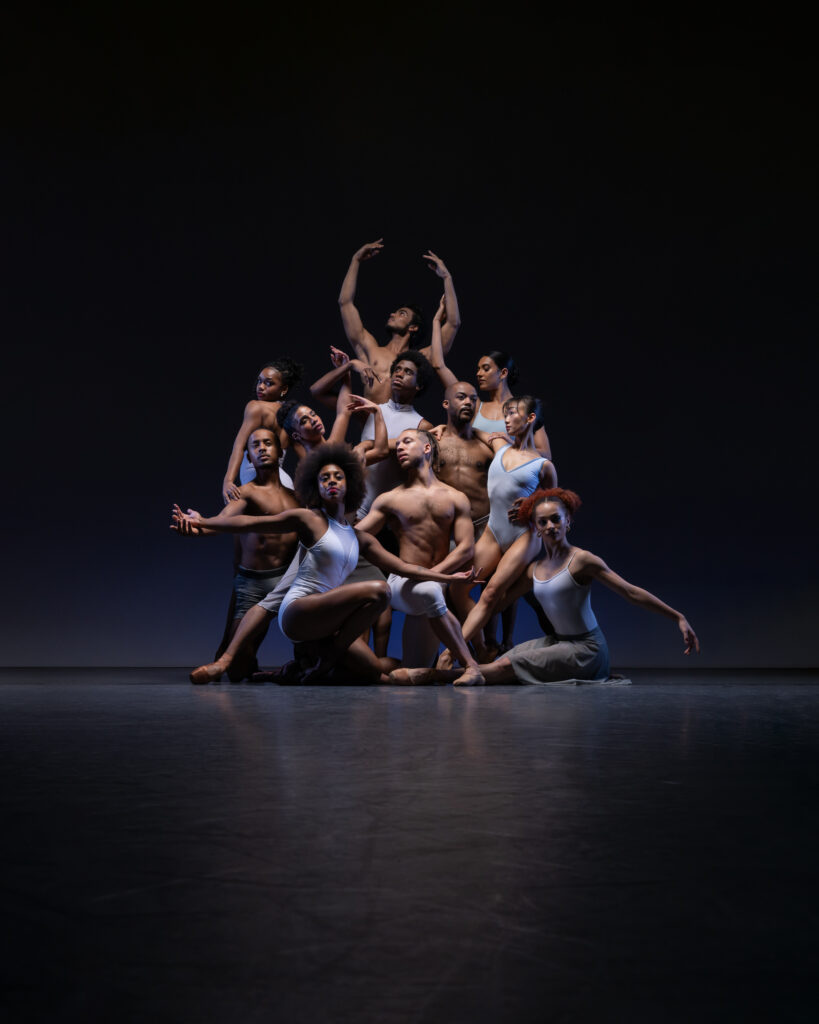
Pancho believes that up until 2020, many people in the UK ballet world viewed the company as an irritant. “People mostly fell into two camps: If there’s a need for something like Ballet Black, what’s going on in the big ballet companies? And the opposite end of the spectrum was ‘This is racist towards white people.’ ” Then, when the Black Lives Matter movement reached the UK, organizations turned to Ballet Black for advice. “Some people genuinely wanted to change. Some people asked because they felt like everyone was watching them, so they needed to be seen to be doing something to make change.”
Beyond being part of important conversations, Ballet Black has made tangible impacts. (Pancho notes that it has sent young dancers from its affiliated school to vocational programs and collaborated with Freed on a line of skin tone pointe shoes released in 2018.) “My goal is to sustain this, and to keep finding new ways of being innovative and encouraging diversity,” she says. “What we did 25 years ago is not what we do now, so what might that mean in another 10, 20, 25 years?”
The post Ballet Black Celebrates Its 25th Anniversary appeared first on Pointe Magazine.