At its most simplified, to plié (from the French verb “plier”) means “to bend.” Yet this foundational ballet step—usually the first one we learn as dancers—holds the secrets to so much more, including relevés, jumping, turning, traveling, and dynamics.
“Plié is protection, but it’s also power,” says New York City–based choreographer and teacher Barry Kerollis. “Pliés exist in two ways, if you want to get scientific: as both potential and kinetic energy.” You create potential energy as you bend the knees and kinetic energy as you straighten them. “If you can’t get deeper, you lose propulsion, whether you’re stretching your knees, rising to relevé, jumping, or pushing into a rotation.”
“Doing plié correctly is crucial to the training and well-being of a dancer,” says Misha Tchoupakov, professor of ballet at the University of North Carolina School of the Arts. Below, he and Kerollis offer their advice for executing this fundamental step correctly.
It’s Not Just the Knees
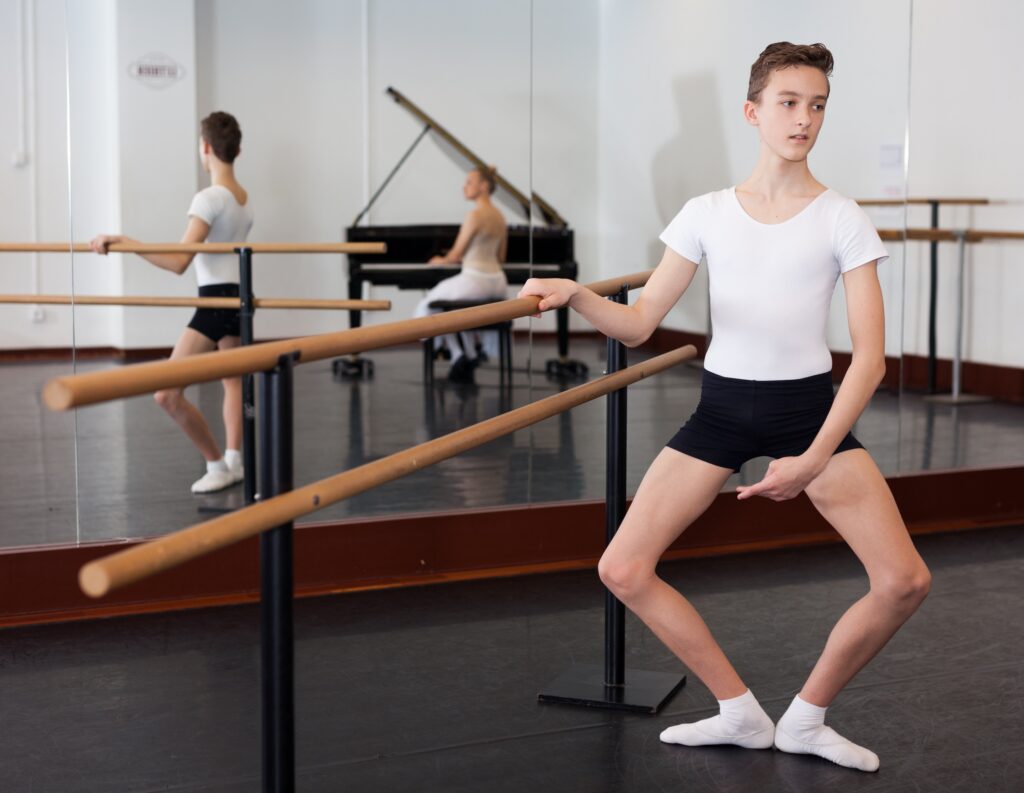
A plié involves three points in the legs: the ankles, knees, and hips. “All three joints need to work simultaneously and be properly aligned,” Tchoupakov says. If one or more is out of sync, like when the hips tip down or the knees push forward of the ankle, your plié loses power, your technique cannot serve you properly, and your body is more prone to injury. “When all three are working, then you have correct placement and can be ready for allégro, whether that’s jumps or pointework.”
When dancers lose control as they descend from a jump or turn, rise up to relevé, or roll down from a piqué on pointe, it often means that they aren’t using their plié correctly. “If you land out of a jump and hop, for instance, or you struggle to hold your position—these are signs that your alignment is not correct,” says Tchoupakov.
Kerollis sometimes sees dancers grip their ankles as they plié. “This reduces the ability for the ankles to take the weight load,” he says. “If I see the tendons pop out at the front of the ankles and the heels begin to lift, I can tell they’re not using their plié efficiently.”
Feel the Feet
Think of your feet as the first floor of a building, says Kerollis. “Buildings don’t grip and pull up the soil. They cover the ground’s surface and apply pressure down into the earth for stability,” he says. “If you don’t build a strong foundation that settles into the ground to support you, you’ll have issues working all the way up the chain.” Holding tension by cupping the feet or gripping the toes, for example, diminishes your plié’s power and shock absorption. “Spread the pressure in your feet down and out for maximum stability.”
Weight distribution is also important. “Your weight needs to be in the balls of your feet, not sitting in the heels” says Tchoupakov. This is because the heel needs to be free to rotate as you move from position to position. “Then our weight is ready, on the front of the foot, for relevés and jumps.”
This is also true for landings. “We have to land through the toe,” he says. “It’s a natural progression: toe, instep, heel, ankles, knees, hips.” This helps both with shock absorption and maintaining alignment. He clarifies that take-offs and landings have different dynamics: dancers should use their plié to quickly push the foot off the ground, then roll through the foot as they descend. “The technique is the same, it’s just a different use of power.”
Keeping weight on the ball of the foot does not mean lifting the heels, he adds, particularly when coming down from jumps. “If you want a long career, you have to put your heels on the ground. It’s too much strain on your Achilles tendon.”
In Contemporary Work
Plié is especially important in contemporary work, as it gives dancers a sense of groundedness. “Classical ballet is all about being turned out and pulled up,” says Tchoupakov. “In contemporary, you might be turned in, and your center of gravity is lower.”
Kerollis notes that this is especially true in second and fourth positions, where there’s more freedom for the feet to be wider apart. “When you stretch the definition of what those positions can mean and widen them, it allows for the hips to go deeper.”

This can be exhausting on the quads and glutes if you let yourself sink. Kerollis says to think of both knees reaching away from each other, like pulling the ends of a sagging clothesline taut. “This helps lift the pelvis up, reducing the need to grip, and makes it a bit easier to support your weight,” he says. Kerollis adds that “grounding” involves the whole body in contemporary work. “That means you often have to tuck the tailbone in plié to get your base as close to the floor as possible.”
Improving a Stiff Plié
Regularly stretching your calves, Achilles tendons, and the bottoms of your feet can help improve a stiff plié. “Some people have a naturally deep bend, and some don’t,” says Tchoupakov, “but your plié can be easily improved.” In addition to doing standard runner’s stretches (with both a straight and bent back leg to target your calf’s gastrocnemius and soleus muscle, respectively), Tchoupakov points to tools dancers can use, like adjustable slant boards and Chacott’s Goopo Training Sandals. (Just be mindful to focus on safe, gradual improvement when using these devices.)
Kerollis advises dancers with a naturally shorter plié to gather and test as much information as possible, in terms of technique, stretching, and strengthening, to learn how to make the best with what they have. “Do some exploration with your teacher or coach to determine what works for you.”
The post Are You Using Your Plié Correctly? appeared first on Pointe Magazine.