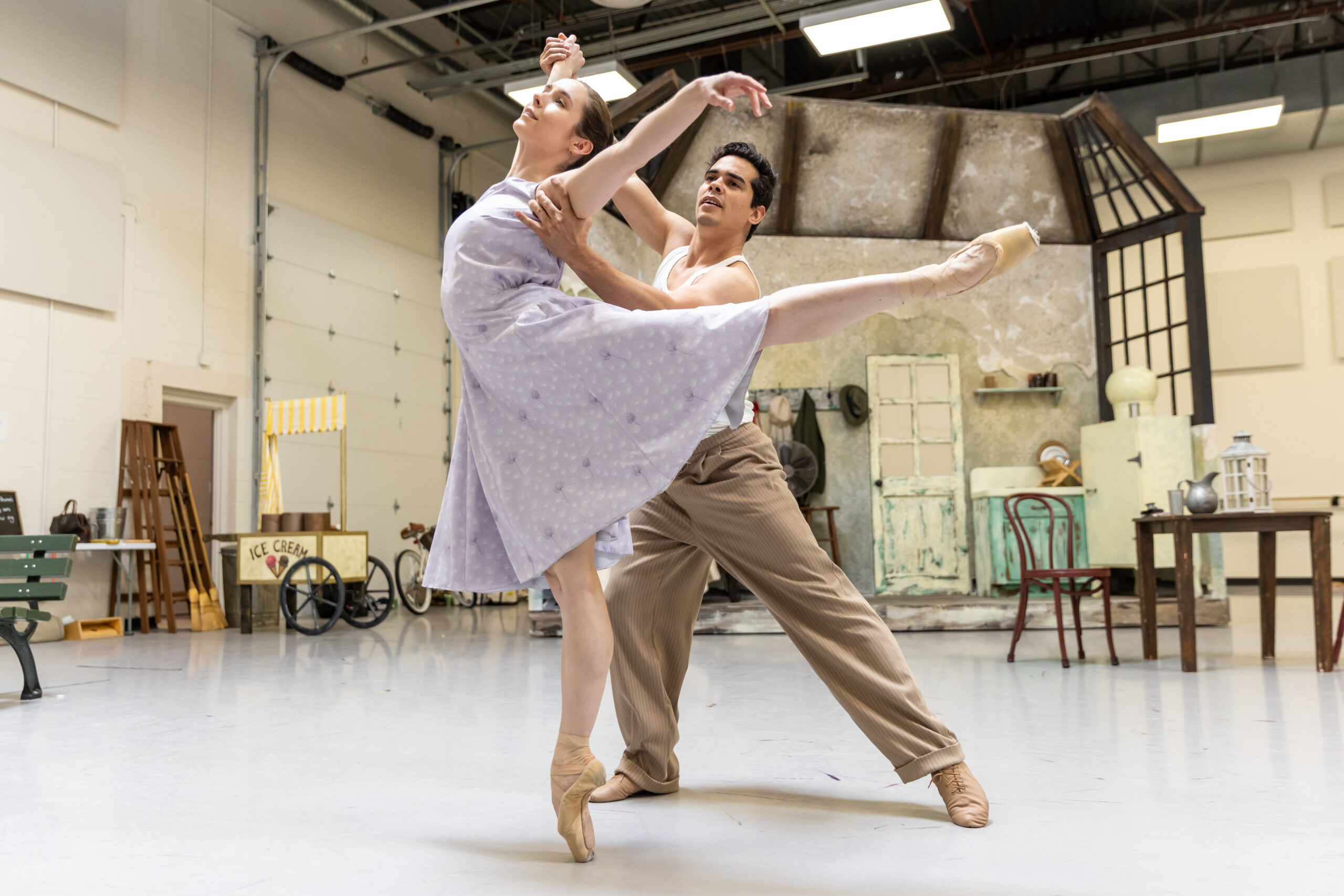
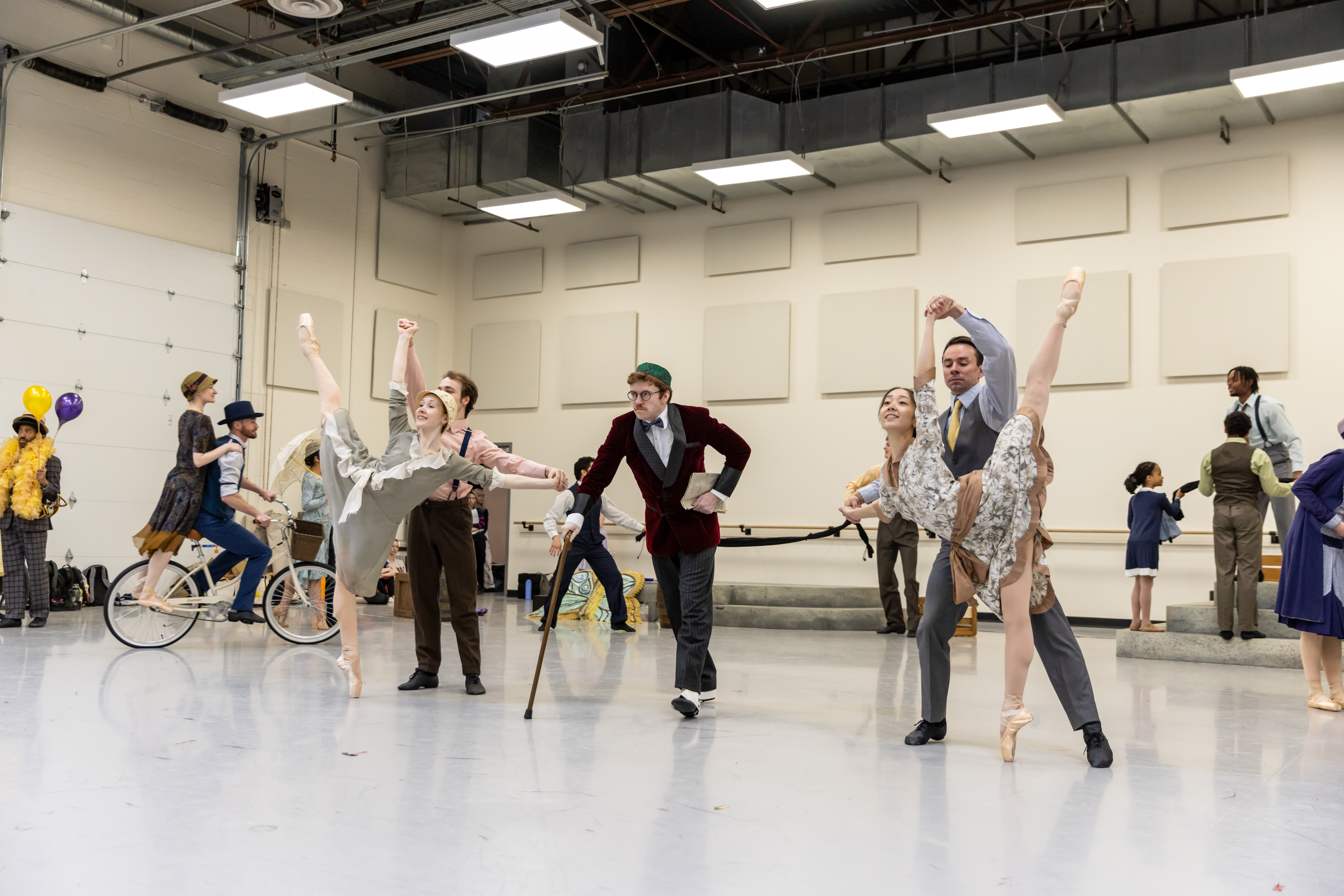
Giacomo Puccini’s La Bohème (1896), one of the “big five” operas, tells a tragic tale of bohemian life in 19th-century Paris. For all its renown, however, the opera has rarely been turned into a dance production. But BalletMet artistic director (and multifaceted visual artist) Remi Wörtmeyer has recently done just that, with an American twist. Rather than 1830s Paris, Wörtmeyer’s La Bohème, running from May 13–17 at the Davidson Theatre in Columbus, Ohio, is set in New Orleans’ French Quarter during the 1920s.
Puccini’s opera La Bohème tells the story of poor artist friends in Paris’ Latin Quarter. Their lives change when Mimì, looking for a light for her candle, knocks on their door on Christmas Eve. She and Rodolfo, one of the friends, instantly fall in love. Their romance contrasts with the fiery relationship between Rodolfo’s best friend, Marcello, and his girlfriend, Musetta. The tale then turns tragic when Mimì contracts tuberculosis; she and an increasingly jealous Rodolfo—who also knows that with their meager means, Mimì’s illness will only worsen—decide to separate. The lovers reunite as the artist friends gather round Mimì in her final moments.
Pointe recently spoke with Wörtmeyer about creating his first original full-length production for BalletMet, and how he has adjusted to his role as artistic director since taking the reins in 2024.
Why La Bohème?
First off, I absolutely love Puccini’s music for the opera. It’s exceptional. Having lived in the bohemian district of Le Marais in Paris, worked with other artists there, and created sculptures for Haute Couture Week, I feel I understand La Bohème’s story. The characters’ insecurities and jealousies are all very real to us as humans.
There are so many ballets out there where the characters live happily ever after. This is definitely not one of them, but that is a part of the human experience and part of why I wanted to choreograph this ballet.
Why did you decide to change the setting?
I wanted to give the story an American relevance by setting it in America’s bohemian heartland. In the 1920s, there was a thriving artist culture in the French Quarter that mirrored what was happening in Paris.
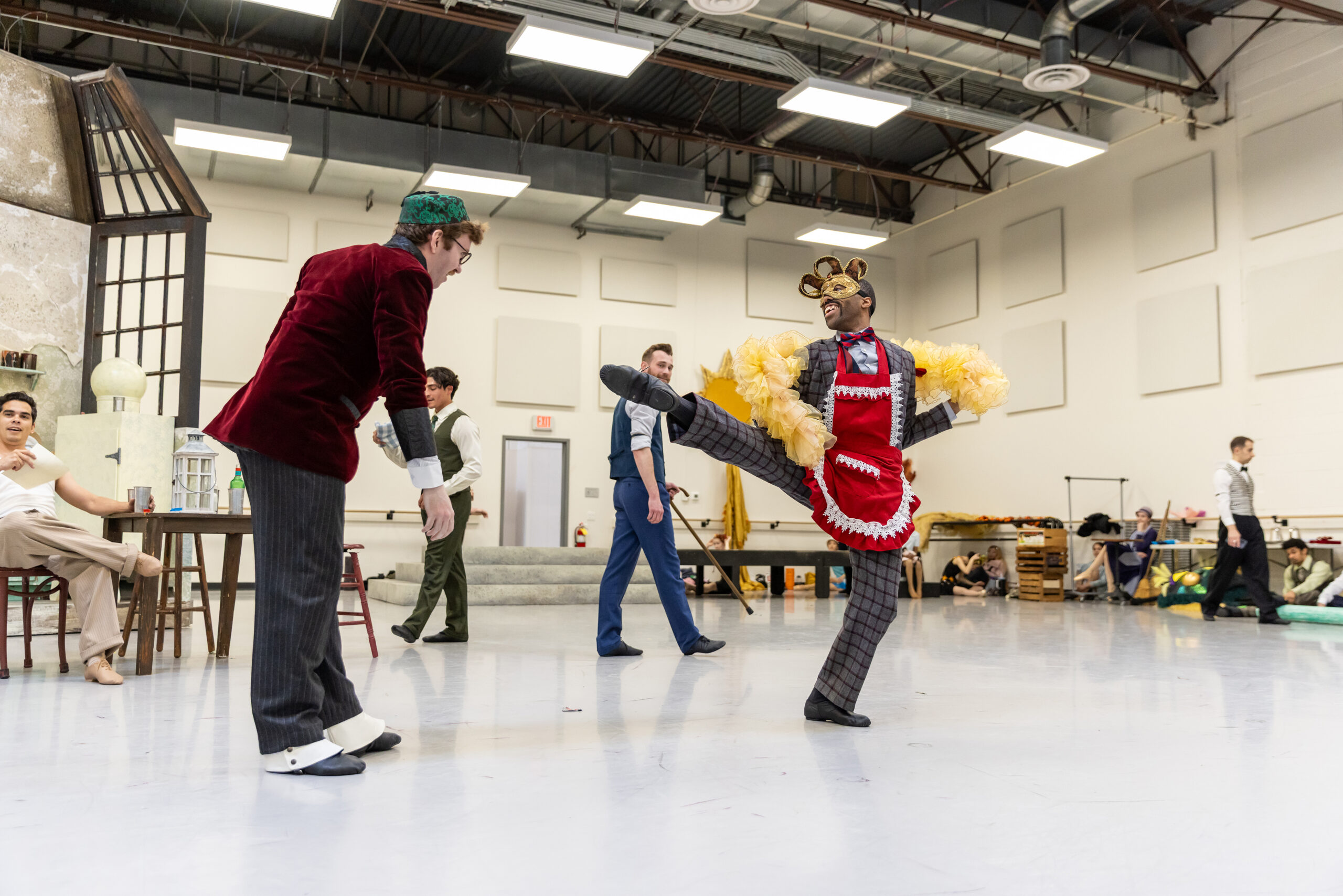
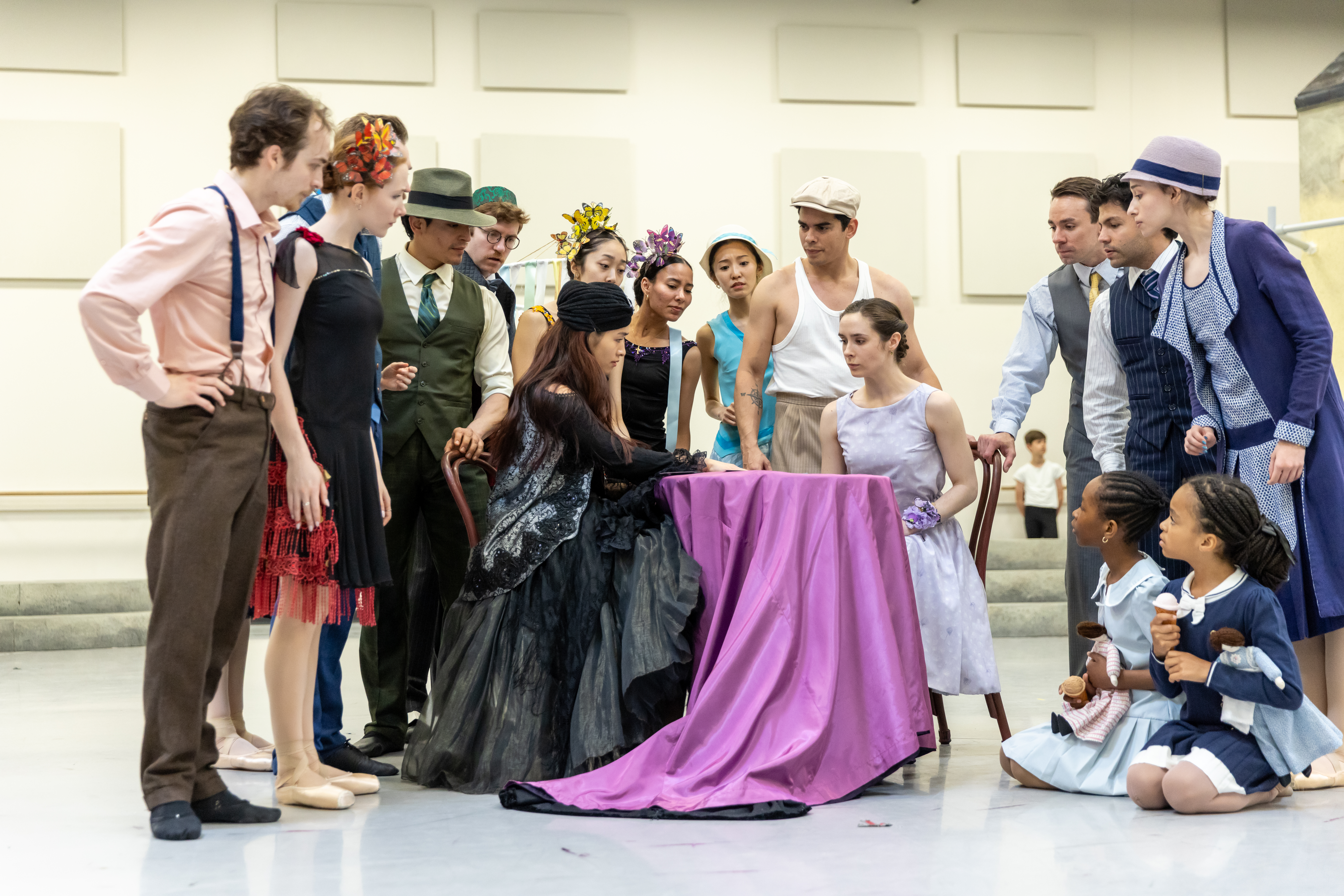
The essence of the story and its characters’ relationships remain the same. The ballet’s first act takes place during a heatwave in the lead-up to Mardi Gras, with all its color and activity. Rodolfo meets neighbor Mimì during a power outage, and they fall in love. The second act takes place in the aftermath of a hurricane that has ravaged the city, and where everyone in the community comes together to clean up. Mardi Gras’ joy and color are gone, and Mimì and Rodolfo’s romance tragically comes to an end.
How would you describe the ballet’s movement vocabulary?
Classical with a contemporary aesthetic. This ballet is mainly on pointe and is technically challenging.
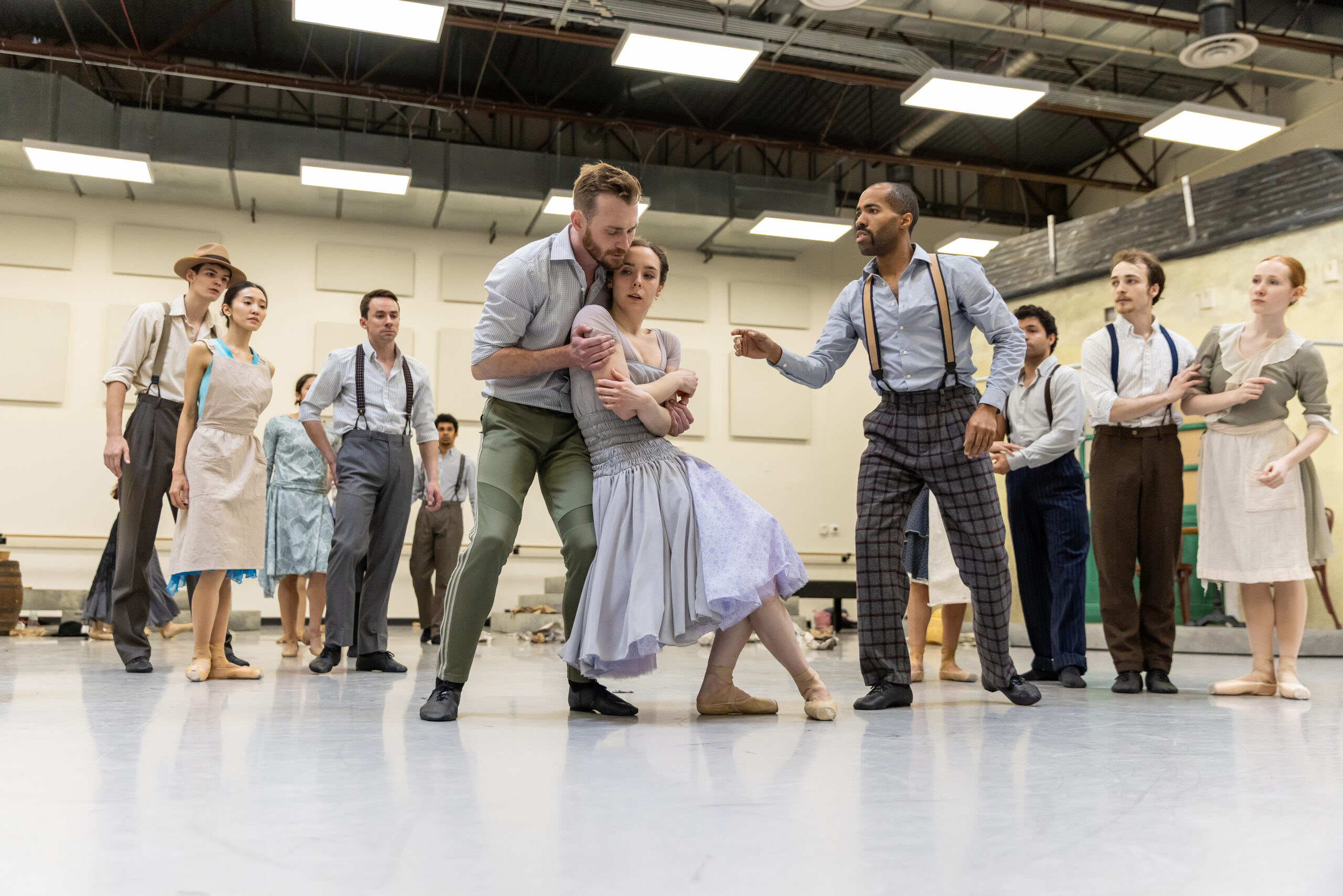
What was your choreographic process?
I started by finding a version of the music without lyrics, which the Columbus Symphony Orchestra will play live onstage. I settled on Kevin Hocking’s adaptation for Western Australian Ballet’s 2004 production of La Bohème, which has been slightly altered. Then I wrote the libretto, designed the sets, and made drawings from which the scenic builder and painter elevated the designs with some fresh ideas. I used an almost second-by-second sequence of the entire hour-and-a-half ballet, written in a document based on the music, as a blueprint.
The music pulled me forward with the narrative. The more I listened to it, the more I could feel where things needed to happen. Often, that was in the same place as in the opera, but other times, because of the new narrative, it was not.
What other changes have you made?
Schaunard, [one of the other artist friends,] now has a girlfriend, and I named her after my mom. I’ve added a tarot card fortune-teller who predicts the storm coming and that Mimì will get sick and die of a broken heart.
This is your second season as artistic director. What has it been like?
It has been a massive learning curve, but one that has been fulfilling and rewarding. I have a marvelous team around me, especially the incredible dancers who inspire and challenge me in good ways. There’s an energy here where people are stretching themselves to achieve wonderful things. It’s exciting to see.
The post Remi Wörtmeyer Discusses His New American <i>La Bohème</i> for BalletMet appeared first on Pointe Magazine.