With its upcoming season at New York City Center, Ballet Hispánico New York is stepping into the future with more pointework and women-created ballets. The program, titled Mujeres: Women in Motion, features works solely by female choreographers. Running from April 23–26, it will include two world premieres—Cassi Abranches’ Brazilian-dance–influenced Trança and Marianela Boán’s Antigone-inspired Reactor Antígona—as well as Annabelle Lopez Ochoa’s Línea Recta, a company staple which uses flamenco vocabulary to touch on themes of individuality and collectivity. Mujeres: Women in Motion also marks an expansion of the contemporary company’s pointe repertoire with Stephanie Martinez’s Otra Vez, Otra Vez, Otra Vez.
“Ballet Hispánico has always peppered its repertory with pointework,” says Eduardo Vilaro, the company’s artistic director, explaining that the decision to incorporate more pointe ballets is twofold. The timing of the decision, he says, largely has to do with the company’s current roster of dancers with a wide range of technical abilities, but it was also informed by more interest from Latina choreographers in creating pointe works.

Martinez’s Otra Vez, Otra Vez, Otra Vez, originally choreographed for Oklahoma City Ballet, is helping usher in this shift. In the one-act ensemble work, which Martinez describes as technically demanding, the female roles are danced entirely on pointe. The Ballet Hispánico dancers were more than up to the task of learning it, she says: “The room feels technically efficient, but it also has a shared lived experience that we share as Latin people.”
That shared heritage is, in part, how Ballet Hispánico came to stage the work. Vilaro and Martinez have long been professionally connected; Martinez was a dancer with Luna Negra Dance Theater, Vilaro’s now-shuttered Chicago-based company, and first began to choreograph at his encouragement. This is her second time working with Ballet Hispánico after choreographing her 2022 duet, Two Sides, for the company. “She’s family,” says Vilaro. “Otra Vez, Otra Vez, Otra Vez is so Ballet Hispánico in terms of the music and the idea behind it. It really blends into the vision of the repertory.”
Martinez’s ballet takes inspiration from Picasso’s The Old Guitarist and imagines the life of the titular character. “I really started to approach the choreography as if we were stepping inside the painting, peeling back the surface to reveal a life behind it,” she says.
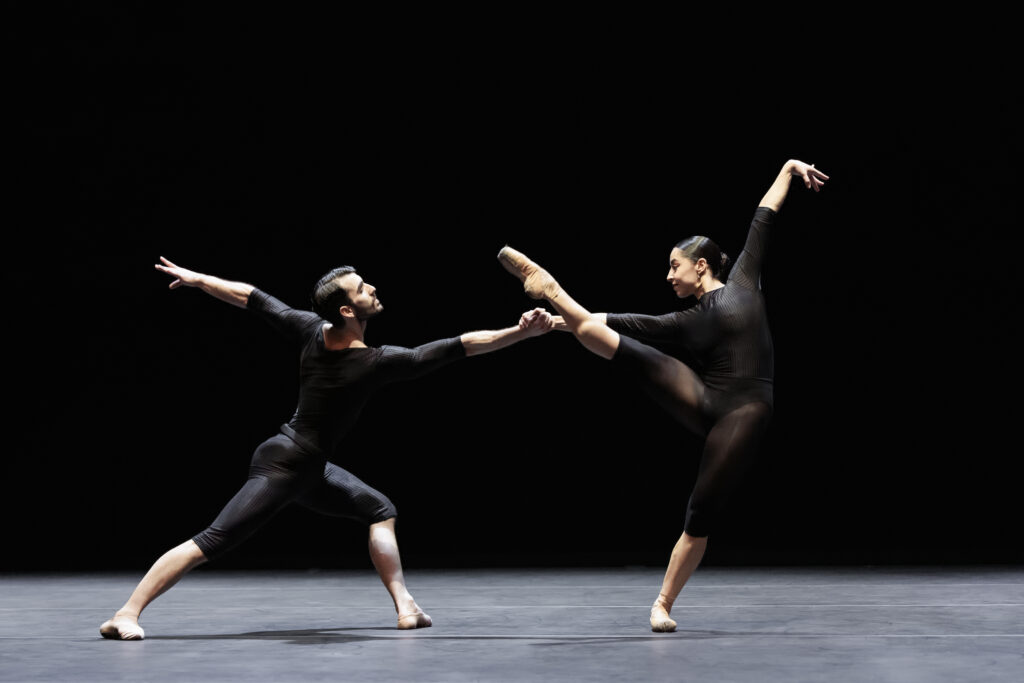
Going forward, Vilaro says Ballet Hispánico’s repertoire won’t become overwhelmed with pointework—but he hopes to add in more. He continues, explaining that Mujeres: Women in Motion represents not only a progression of the company’s programming, but an ongoing commitment to fostering female choreographic voices. “Coming from the Latino community, I know what it feels like to be tokenized,” he explains. “There was this big push to get female choreographers, but you don’t just do it once, right? You’ve got to maintain the language. You’ve got to be showing ‘This is our commitment to Latina choreographers.’ ”
The post More Pointe, More Women Choreographers in Ballet Hispánico’s Mujeres Program appeared first on Pointe Magazine.