These days, it’s de rigueur for ballet choreographers to incorporate modern-dance–inspired steps into their works, or for companies to commission pieces by contemporary choreographers—just think of Wayne McGregor, Sharon Eyal, and Crystal Pite. But this wasn’t always the case. American choreographer Glen Tetley (1926–2007), whose centenary is being celebrated this year, is credited as one of the first to combine ballet with modern, paving the way for the choreographic cross-pollination we enjoy today.
Trained with modern dance pioneers like Hanya Holm and Martha Graham, Tetley drew on their principles of fall-and-recovery and contraction-and-release to inform works he created around the world. He danced with The Joffrey Ballet, Martha Graham Dance Company, American Ballet Theatre, and on Broadway before turning to choreography. While he choreographed many ballets for North American companies, such as ABT and the National Ballet of Canada, he was also very active in Europe, co-directing the Nederlands Dans Theater from 1969–71 and serving as artistic director of Stuttgart Ballet from 1974–76.
Centennial Celebrations Across the Globe
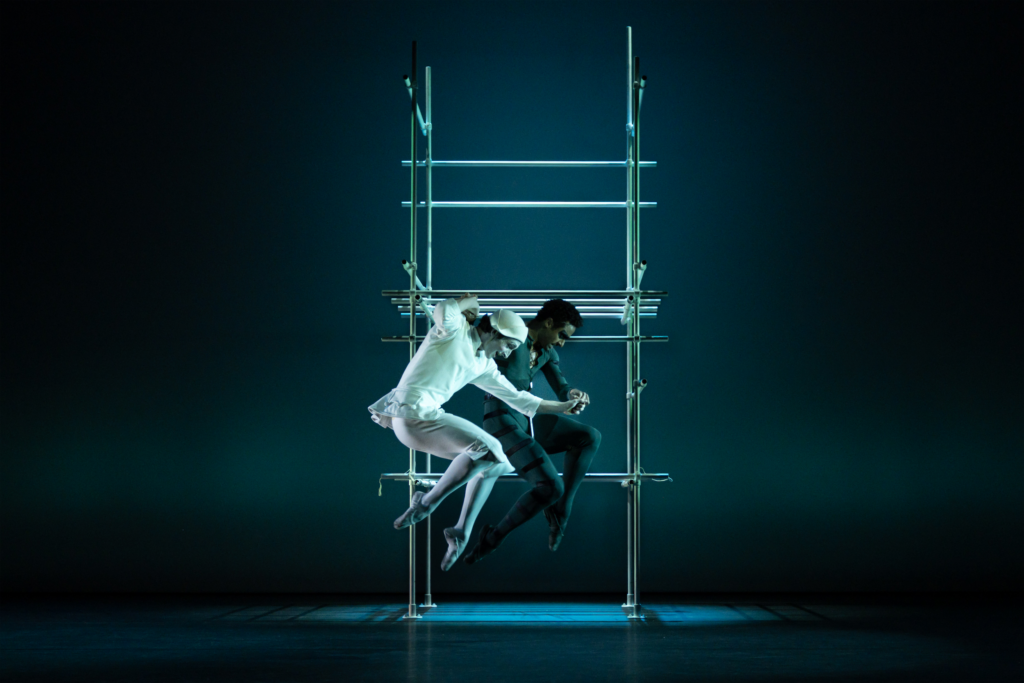
It’s no surprise, then, that Tetley’s centenary is being marked with numerous performances on both sides of the Atlantic. In February, for example, The Royal Ballet remounted Pierrot Lunaire. Inspired by commedia dell’arte stock characters, the 1962 trio is set to a challenging atonal score by Austrian American composer Arnold Schoenberg, demonstrating Tetley’s penchant for unconventional musical choices. Originally danced by Tetley himself, the titular clown was said to be reflective of his shy personality.
Another favorite work, Voluntaries (1973), has been programmed this year by Joffrey Ballet, Norwegian National Ballet, Ballett am Rhein, and Stuttgart Ballet. “[Voluntaries] is more neoclassical: The women dance in pointe shoes, and there are a lot of classical lifts,” says Alexander Zaitsev, who, as a répétiteur for the Glen Tetley Legacy, has been responsible for restaging many of Tetley’s works this year.
Challenge and Reward
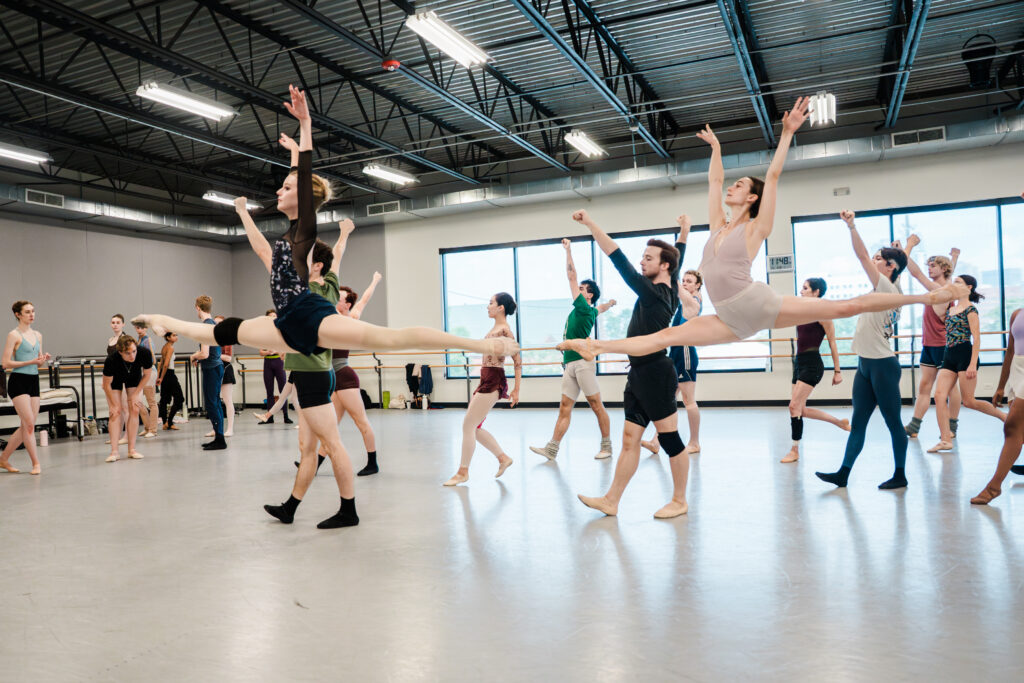
Voluntaries’ neoclassicism contrasts with what Zaitsev describes as Tetley’s “wild” interpretation of The Rite of Spring, which Colorado Ballet will be performing from April 10–19. Everyone from Pina Bausch to Mark Morris has choreographed to Igor Stravinsky’s riot-inducing 1913 score, each adding their own spin to the tale of a sacrificed “chosen one.” “[But] to me, Glen’s is the only version out there,” says Gil Boggs, Colorado Ballet’s artistic director.
“The contractions that the dancers do over and over again… [The Rite of Spring] is just such hard work to perform,” says Boggs, who danced Tetley’s works himself during his career at American Ballet Theatre. “Some companies put sick buckets in the wings because the men are just dying,” he says. Boggs adds that he warned the Colorado cast to be in good shape before rehearsals for Rite, “because this is going to take everything you have.”
The work is also emotionally demanding. “It doesn’t allow you to go through the motions of the choreography; you really have to give something to make this one work,” says Boggs. And yet, it’s immensely rewarding: “The cast come out of rehearsals huffing and puffing, but with big smiles on their faces. They’re thoroughly enjoying it.”
In the Studio With Tetley
The dancers’ reactions reflect Boggs’ own memories of working with Tetley at ABT. While the choreographer was very specific, “he had an energy to him that really made you want to succeed.” While rehearsing Voluntaries, Boggs remembers, “[Tetley] would always tell me, ‘You have to be bigger!’ ”
Personal anecdotes like this feed Zaitsev’s restaging process. He, too, worked firsthand with Tetley during his career as a dancer at State Opera Dresden and Stuttgart Ballet, and relies more on memories than performance videos to shape each new cast’s understanding of the choreographer’s artistic intentions. “There are lots of things about how to breathe in his ballets,” he says, giving one example of something that cannot be translated through a screen. “I’m also trying to be in the studio with an energy of helping the dancers,” Zaitsev adds. “[Tetley] was a very nice human being, and he brought this to the studio. I’m trying to do that too.”
Tetley Today
Colorado Ballet’s performance of The Rite of Spring will be part of its MasterWorks program, which also features George Balanchine’s Concerto Barocco and the premiere of Yoshihisa Arai’s S. Rachmaninoff.
Viewed alongside the works of other pioneering American choreographers, past and present, Tetley’s creations will probably give audiences a sense of just how innovative he was. “His ballets look like they’ve just been created. They look really new even now,” says Zaitsev. He hopes that, following the attention of the centenary, more companies will be eager to restage his work for new audiences—and that new generations of dancers will be able to experience Tetley’s choreography firsthand.
“Anybody who worked with Tetley or danced his ballets and became choreographers really learned how to take the next step: how to dance innovatively and creatively,” says Boggs. “That’s his legacy.”
The post Glen Tetley at 100: Celebrating the Choreographer Who Bridged Ballet and Modern Dance appeared first on Pointe Magazine.