Ayomi Tsalu’s love for dance all began with the 2001 film Save the Last Dance. The movie was Tsalu’s first introduction to classical ballet at age 12, and he was hooked—dreaming of one day studying dance but having no opportunities in his hometown in Nigeria.

Tsalu first stepped into a studio in 2010, when he attended university and discovered the local studio where he would begin his journey as a teacher. The studio’s instructors had little to no formal ballet training, which Tsalu says is common for teachers in Nigeria, and this ignited in him a passion for offering quality ballet instruction to Nigerian students.
Tsalu began Above Ballet Company in 2015, teaching classes around the country and creating cohorts of dancers for performance opportunities, while simultaneously seeking out more extensive training for himself. In 2019, as the founding director and CEO of Nigeria’s Above Ballet Company, Tsalu attained Level 3 certification in the Cuban Methodology of Ballet with Alicia Alonso’s Dance Foundation. In 2022, he began training with the Imperial Society of Teachers of Dancing (ISTD) and attained his diploma in dance and ballet education the following year. In June 2024, Tsalu opened the Above Ballet Company Academy in Lagos, where he trains students through nine grade levels and presents them for ISTD graded examinations. In 2025, he completed American Ballet Theatre’s National Training Curriculum, which qualified him to teach pre-primary to grade 3.
The name “Above Ballet Company” comes from Tsalu’s desire to “be above the standard” and raise the bar of the ballet training that currently exists in Nigeria. “I know that there are a lot of ballet students who are in search of quality ballet training,” he says. “My vision is to bring [professional] ballet training to Nigerian students, trained entirely in the country by a Nigerian.”
Here, Tsalu shares his passion for training Black artists and his vision for elevating the standard of training in Nigeria.
Your website says, “Everyone loves to promote Black excellence—but who is willing to help build it?” Can you expand on that?
What will happen if I provide Nigerian ballet students with quality ballet training and expose them to what every other ballet school in the world offers? How far can they go? My vision is to do that.
I strongly believe that if the world has Black people in it, white people in it, Asians, every race, then the stage should also reflect the true world. Everybody in the world has a place onstage. Everybody deserves a chance in a dance class. Give [everyone] the chance to show you how far they can go.
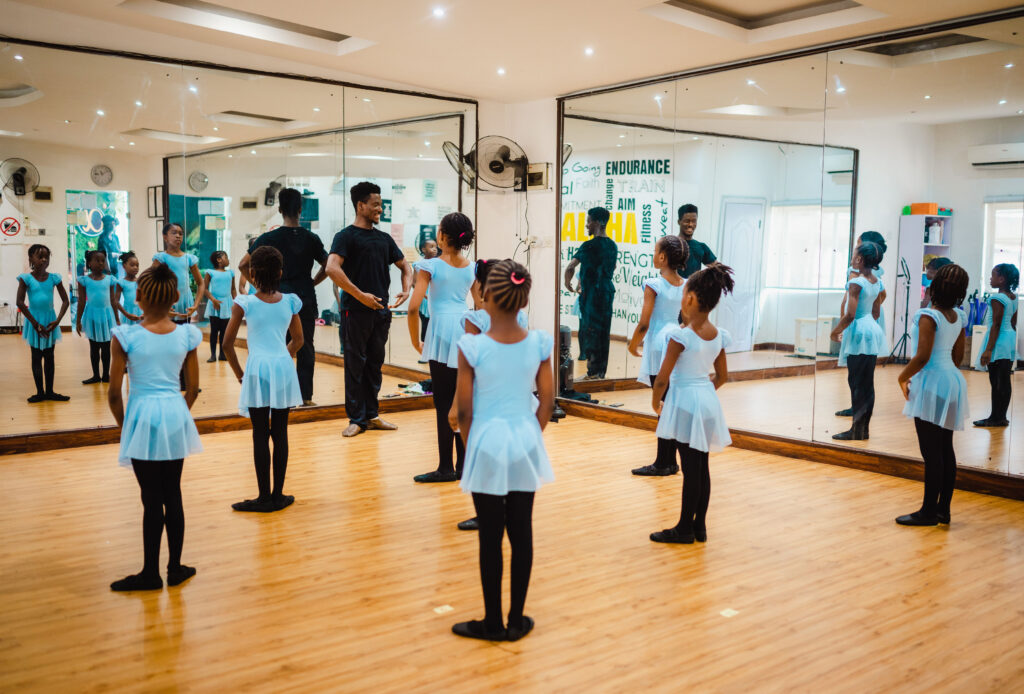
Why are ballet exams important to you?
I’ve been taking a lot of classes since I started teaching, but until I got qualified, nobody knew me. I know the traction that you get from having a qualification. So I want to give Nigerian ballet students proof of their training.
Right now, I present students for ISTD [Imperial Society of Teachers of Dancing] exams through nine grades. We have presented four groups of students for exams, [a total of] 32 students. All of these classes are open to both children and adults. I chose to open it to adults because I wanted ballet teachers to have a place where they themselves can train and actually learn how to teach ballet.
Who has supported you and Above Ballet Company?
The Imperial Society of Teachers of Dancing has changed everything about my dancing, my vision, my brand. Specifically, my teacher Anna Morgan. I have gotten funding [and scholarships] from the ISTD on specific projects. Shades Dancewear gave me a ballet shoe that I used for my exams in the UK. Before then, I had never had ballet flats. They took it upon themselves to buy me five pairs of shoes. Renversé Ballet was also trying to raise funds for me when I was traveling to the UK. Steffi [Carter] did everything to make sure that I made that trip.
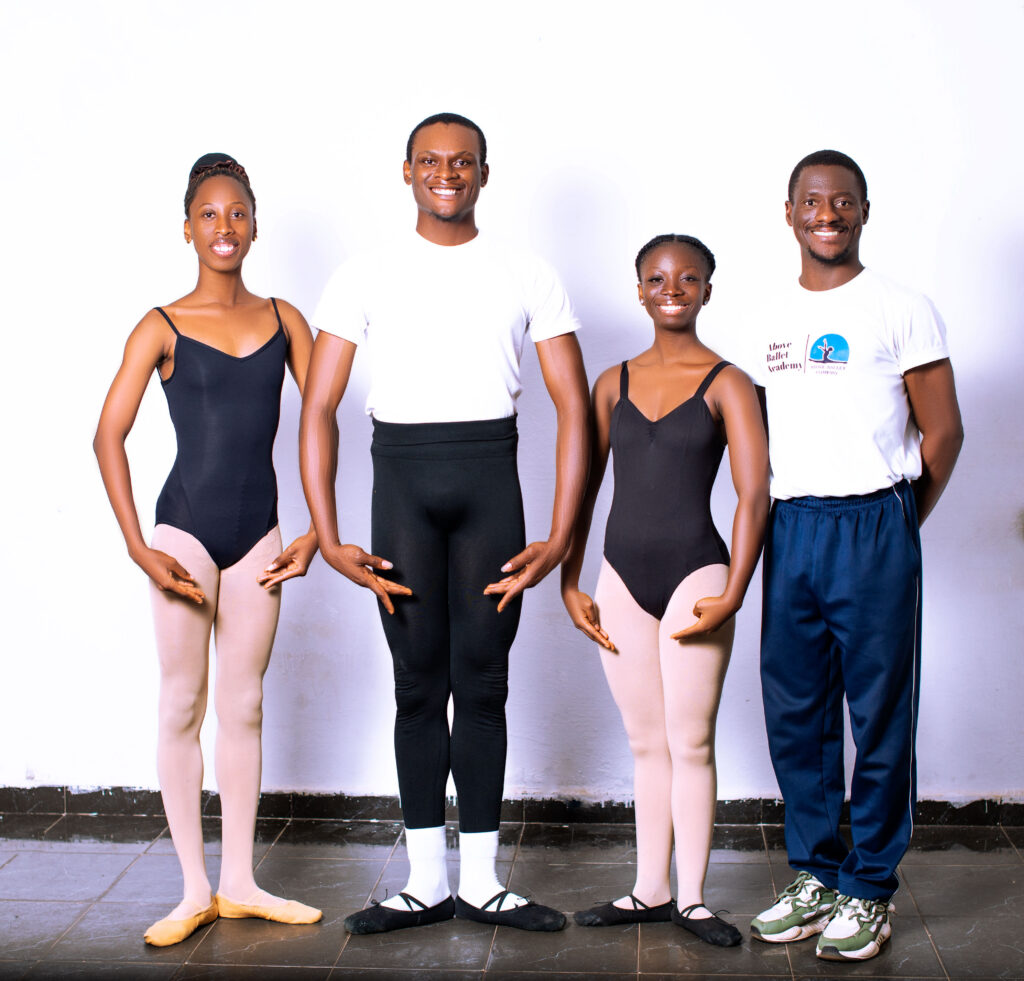
What is your vision for the future of Above Ballet Company?
I want it to be a feeder school to vocational schools around the world. So if a student has trained through the ninth grade at my school, they can transfer to a school abroad that can train them to become professional [dancers]. I want schools abroad that want ballet students from Nigeria. I want my students to actually be able to audition for things like that, move abroad, and say they started [their training] here.
The post How Above Ballet Company Is Raising the Standard of Ballet Training in Nigeria appeared first on Pointe Magazine.