There is something soothing about Myrna Kamara’s voice as she teaches. Earlier this month, surrounded by dozens of pre-professional dancers at the 2026 Prix de Lausanne, she led daily warm-ups, encouraging dancers to breathe and lean into the music. In such a high-pressure, nerve-racking environment, she exuded warmth and positivity.
The competition’s livestream, viewed by millions, has brought Kamara renewed visibility, as well as curiosity about the American ballerina’s career. A former dancer with New York City Ballet, Kamara later moved to Miami City Ballet in the 1990s, where she rose to principal dancer before joining Béjart Ballet Lausanne, again as a principal. She’s since enjoyed a long career as an international guest artist, runs her own company in Switzerland, and teaches all over the world. In a recent interview with Pointe, Kamara talked about her early training, wide-ranging career, and what she now tries to impart as a teacher.
Balanchine Beginnings
Born in Baltimore, Maryland, Kamara trained initially under Ellen Gniadowska and Peggy Lynne, and spent a year at the Washington Ballet School. Lynne then encouraged Kamara to audition for the School of American Ballet. “That’s where the sparks flew,” says Kamara, who was accepted into the summer intensive and then invited to attend SAB’s winter course. She would often see George Balanchine in the hallways, and he would sometimes pop his head into class, but he died before she entered NYCB, at the invitation of Peter Martins, in 1984.

“Dancing Balanchine’s ballets, until this day—they never leave me,” says Kamara. “He was really the master.” As a young corps de ballet member, she also performed works by Jerome Robbins, Eliot Feld, Lar Lubovitch, and Martins. “I was thrown in a lot, but I didn’t mind—it made me a stronger dancer,” she says. “My attitude was always, ‘I can do this.’ Especially ballets that I loved, like Balanchine’s Tschaikovsky Piano Concerto No. 2.”
After five years, she joined the now defunct Bonn Ballet in Germany as a soloist. Its director, Youri Vámos, created the role of Nubiana for her in his new ballet Spartacus, which she and the other principal dancers were later invited to perform at the Arena di Verona Festival in Italy. “I enjoyed the experience in Bonn, but it was a different style of dancing that my body didn’t want to accept, especially coming from NYCB,” Kamara says.
In 1990, after one season in Bonn, Kamara left for Miami City Ballet, then led by former NYCB star Edward Villella.
[blur-below]
Miami Moves
Villella championed her talent and soon promoted her to principal dancer. “He was like a genius, so disciplined but also very human,” Kamara says of Villella. “When he coached me, he’d explain exactly what he wanted. He wanted everything very precise, very clean.”
He cast her in an array of roles, from the Siren in Prodigal Son to the Russian Girl in Serenade to the leads in all three acts of Jewels. “I was very well-known for the Tall Girl in ‘Rubies,’ in particular,” she says. “And I danced Allegro Brillante, Elégie, and Nutcracker, of course—Arabian, along with Dewdrop and Sugarplum.”
Kamara was also MCB’s first Black principal dancer. “To be honest, I hardly thought about it back then—I was just so concentrated on doing my roles, and it didn’t feel like an issue in Miami,” she says. “I’m happy that I got the chance, and that I’ve been able to do certain ballets. And I’m happy and supportive for the people who are getting the opportunity now. But my belief is an artist is an artist and one should be granted accordingly.”
From Balanchine to Béjart
During her five years with MCB, Kamara started booking international guest artist opportunities. Then, in 1996, she joined Béjart Ballet Lausanne, led by choreographer Maurice Béjart, as a principal dancer. “Like before, I had to learn a whole other style, a whole other language,” she says. “I worked directly with Maurice, who was really intense, but in a good way, and very kind,” she says. “He always knew exactly what he wanted.”
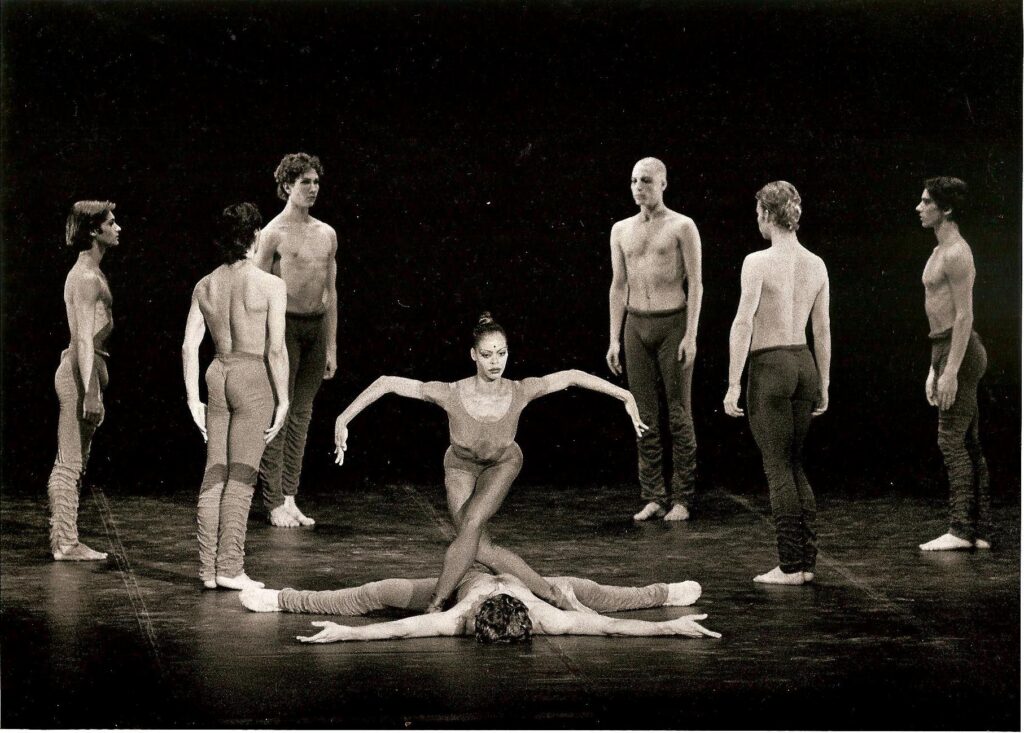
She danced with Béjart Ballet for three years, performing lead roles in ballets like Bhakti and Sacre du Printemps, as well as Le Presbytère (Ballet for Life), to music by Queen and Mozart. “But because the company performed so much, I lost a lot of outside guesting opportunities,” she says. “I thought, Okay, I’m getting older. I want to continue to dance, but as an international guest artist.”
On Her Own
She’s since performed all over the world, including at galas and festivals in Italy, South Africa, Japan, Luxembourg, and Portugal. She reprised her role in “Rubies” with Cape Town City Ballet, and danced as a guest artist with Carolina Ballet. And for many years she starred at the Arena di Verona Opera Festival as its principal ballerina in Aida. She danced in three different Aida productions, including the premiere of Franco Zeffirelli’s production alongside Roberto Bolle, and choreographed by Vladimir Vasiliev. “Then when Mr. Zeffirelli took this production to La Scala, I danced it there, too, which was really fantastic,” she says.
-
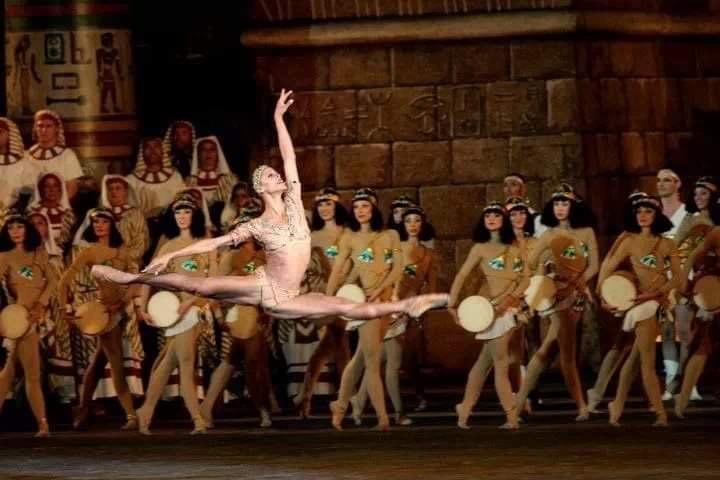
Kamara in the Aida 1913, choreographed by Susanna Egri, at the Arena di Verona Opera Festival. Photo by Jean Franco De Bosio, courtesy Kamara. -
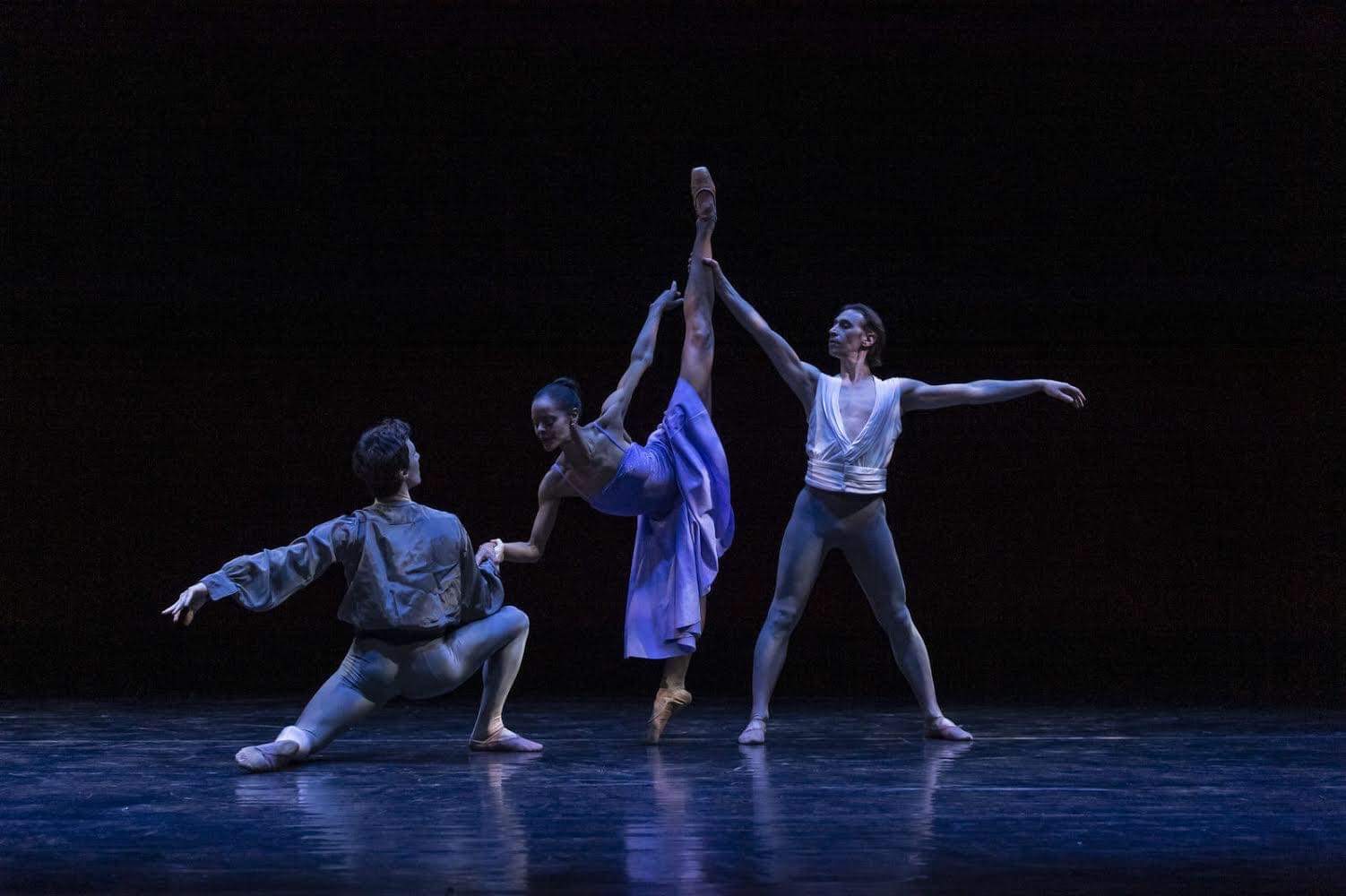
Kamara with Dinilo Zeka (kneeling) and Marco Fagioli (right), in Alvin Ailey’s The River for BalletXtreme. Photo by Giovanni Vecchi, courtesy Kamara. -
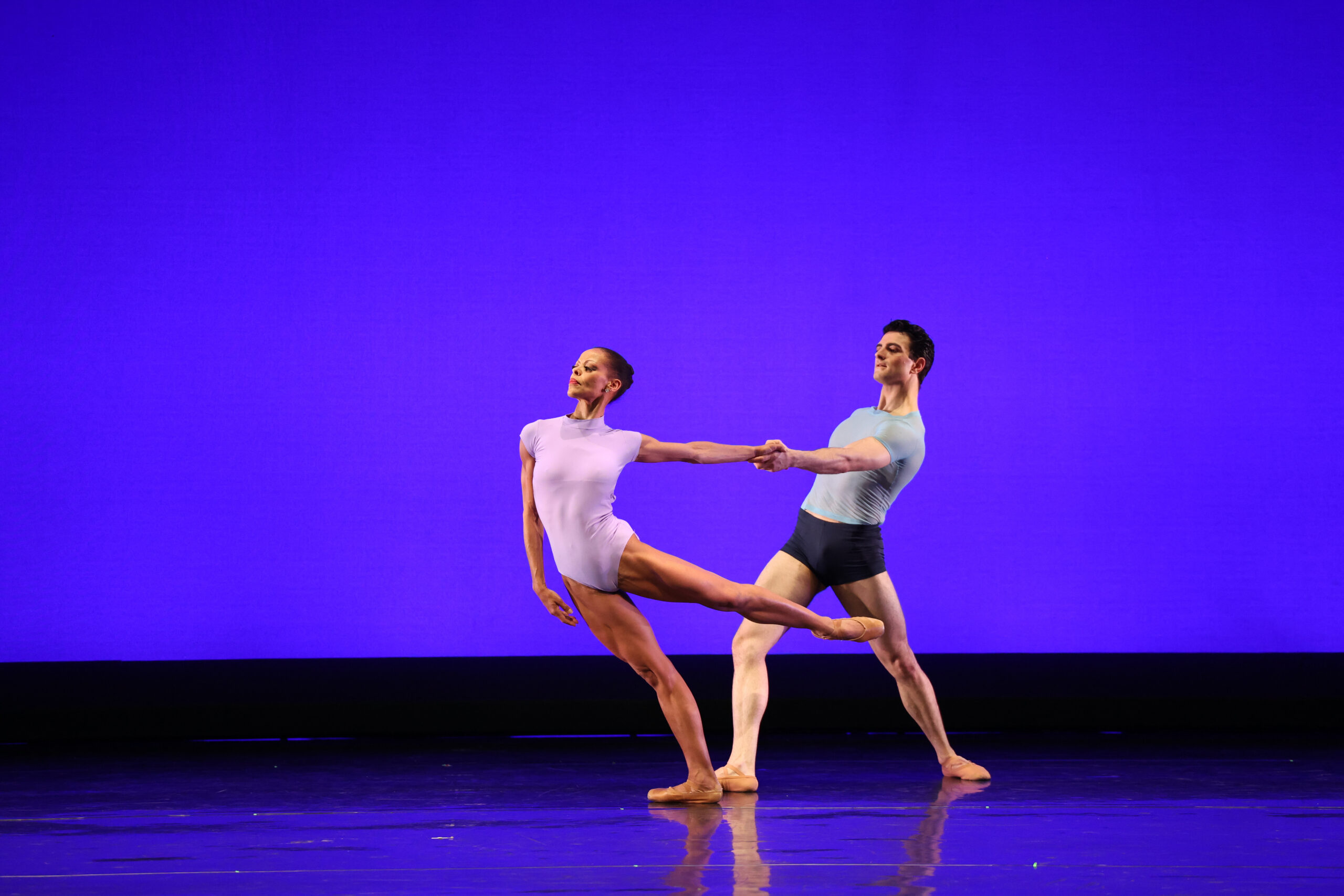
Kamara and Ariel Merkuri of BalletXtreme in Paolo Mohovich’s “Sweet Hesitation” from Pieces of Love and Suspicion at Hollywood Ballet’s Poetry in Motion gala. Photo by Sarah Madison Photography, courtesy Kamara. -
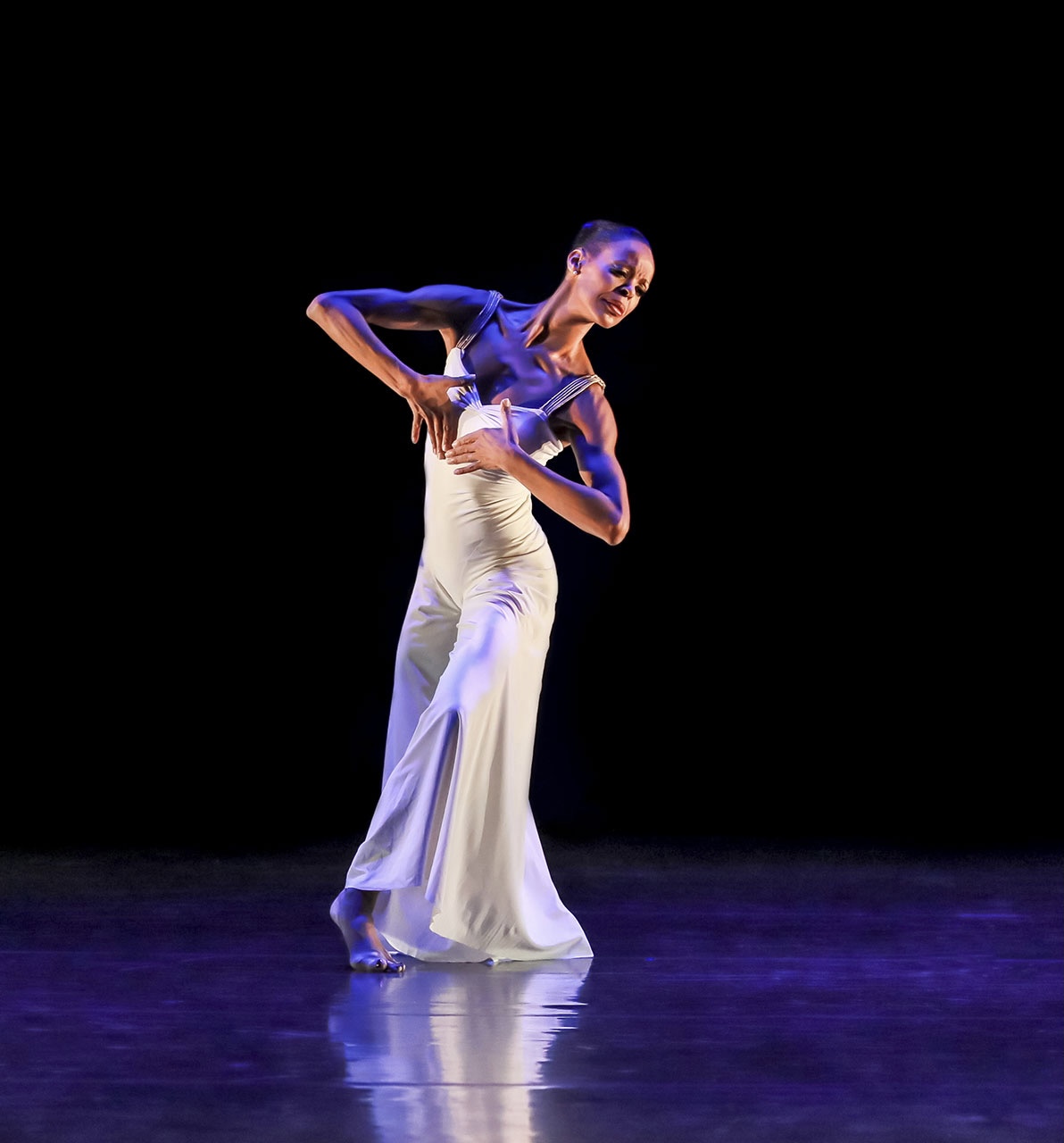
Kamara in The Moon Duet by Martha Graham. Photo by Jeff Cravotta, courtesy Kamara.
In 2016 Kamara, who is based in Zurich, started her own small company, BalletXtreme. Made up of a diverse roster of artists, it features neoclassical and contemporary ballet, and even works by modern dance masters like Alvin Ailey and Martha Graham. She still regularly performs, both with her company and as a guest. “I take class every day,” she says about keeping her body strong. “I have a lot of energy, but I pace myself so that my day is well thought-out. I also request a lot of time to prepare for bookings—last minute doesn’t work for me.”
Teacher’s Wisdom
She applies this rhythm to her teaching schedule, too. In addition to being on faculty at the Academic Sports Foundation of Zurich, connected to the University in Zurich, she travels internationally as a guest instructor. Kamara has been invited to teach at SAB, San Francisco Ballet School, Tanz Akademie Zürich, and Orsolina 28, among others, as well as Lyon Dance Studios, where she works with its junior company, coaches dancers for competitions, and serves on the advisory board. “Teaching at the Prix de Lausanne has given people a chance to see me conduct class during the livestreams, so I’ve gotten some contacts that way,” she adds.
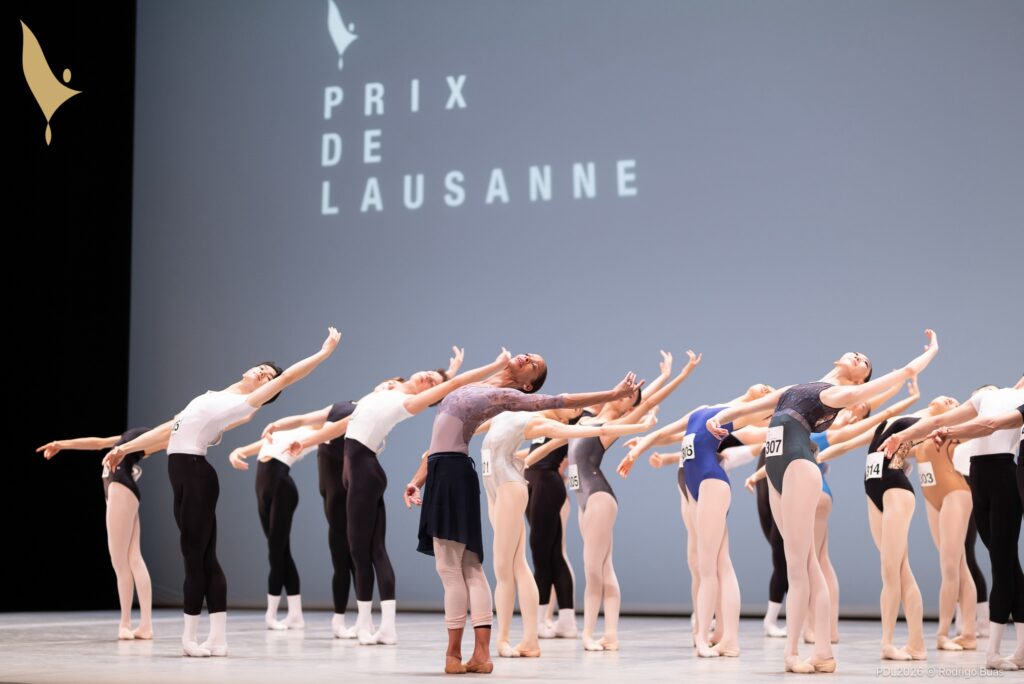
Her biggest advice for young dancers is to hone their musicality. “My father was a concert-trained pianist—he played all the time and helped me develop a musical ear, in addition to my Balanchine training. So this is very important to me,” says Kamara. “Musicality helps technique; technique does not help musicality.”
As for what else she tries to impart on dancers, she urges them to learn how to use their breath and to pay attention to details in class. “I want students to try to do the steps as I show them,” she says. “When people change combinations, it’s usually because they’re taking the easy way out.” She also encourages her students to play with nuance, “so that everything doesn’t look the same,” says Kamara. “When I worked in Verona, an opera friend of mine used to talk about how she colors the notes when she sings. And dancers need to color the choreography, as well—not always strong, not always soft, but creating interaction between the two.”
The post The Remarkable Career of Myrna Kamara appeared first on Pointe Magazine.