Kevin Thomas, artistic director of Collage Dance, feels driven to create movement about subjects to which he is culturally connected. Inspired by Southern Black cotillion culture, his The Cotillion will make its world premiere this month in the company’s signature winter program, Rise. It will run February 20–22 at the Cannon Center for the Performing Arts alongside Kevin Iega Jeff’s Flack and Thomas’ own Rise.
Cotillion social dance originated in 18th-century France before spreading to England and what is now the United States. Since then, it has evolved into an important part of African American culture; primarily held in the South, cotillions and beautillions (for girls and boys, respectively) are now widely known as a coming-of-age tradition in which Black youth take extensive etiquette classes. They then display their skills in waltz, conversation, and table manners at a formal dinner culminating their training. Thomas, who for the past decade has been choreographing for cotillions and beautillions through The Links chapters in Tennessee, is pulling from that experience in his new ballet, elevating his typical waltz choreography to a professional caliber. “This work was created to honor lineage,” says Thomas. “I remind [the youth that I work with] that what we’re doing is greater than who they are. They represent something greater.”
Read on to learn how Thomas wove that lineage into every detail of The Cotillion.
Can you speak to the historical roots of the Southern Black cotillion culture that inspired this ballet?
Black cotillions were created by a dentist named Dr. Ransom Venson, his wife, Ethyl Venson, and DJ Nat D. Williams in Memphis in the 1930s. At the time, there was a parade called the Memphis Cotton Carnival, and it was mainly for white people. So the Vensons and Nat D. Williams created the Cotton Maker’s Jubilee to highlight the African American community, and this tradition still happens today in the form of a cotillion. It honors our beauty and intelligence and shows our youth tangible examples of excellence.
What was your choreographic approach for The Cotillion?
The Cotillion is divided into three sections, and the choreography is drawn from the music. The first movement is to our [Black] national anthem, “Lift Every Voice and Sing,” performed by Brandee Younger. The choreography is classical ballet. It begins with one young student—she’s only 15 or 16—and it looks like she’s getting ready for the cotillion, putting on her gloves. Then everything starts with all the other dancers coming out.
The second movement is my ode to the beautiful women of our culture. The composer is Samuel Coleridge-Taylor. I used his “Valse Bohémienne.” This is a grand women’s movement, almost Raymonda-esque in its elegance. For the third movement, I go to jazz. Saxophonist Wayne Shorter has a piece called “Footprints,” and this music is more complicated. It’s still a waltz, but it has complicated rhythms. I think it’s great to see the dancers move through spiritual to classical to jazz. It really tells the richness and the depth of us as a people.
Can you describe the ballet visually?
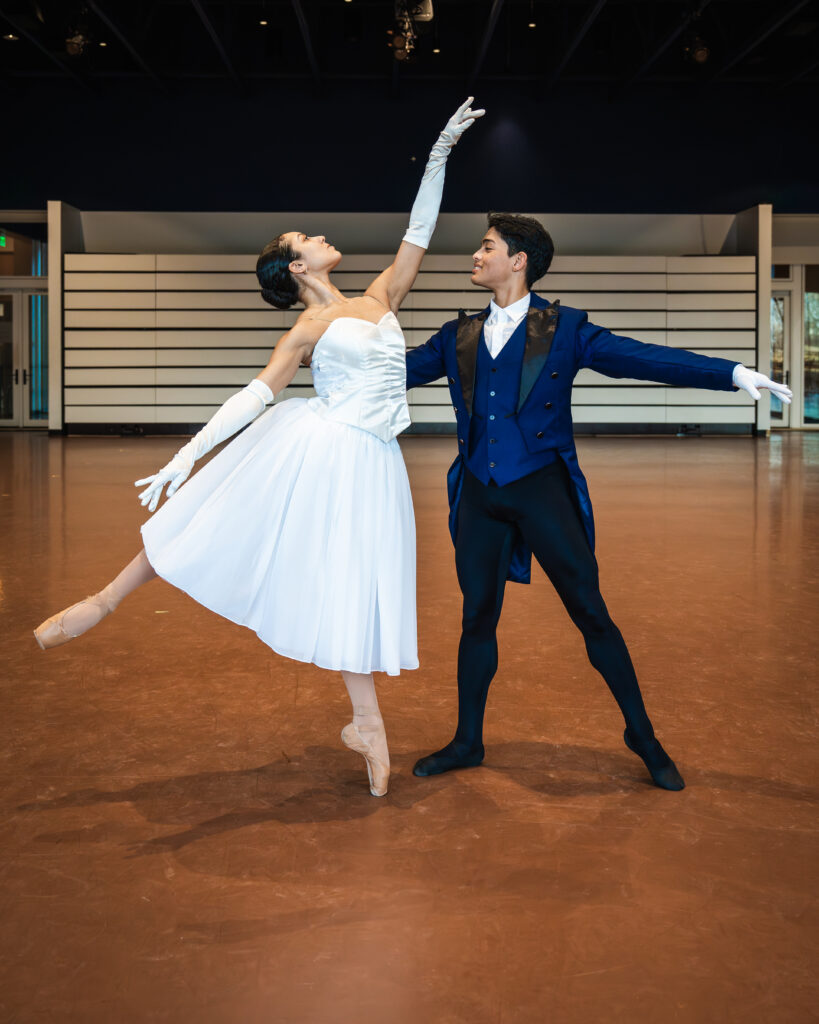
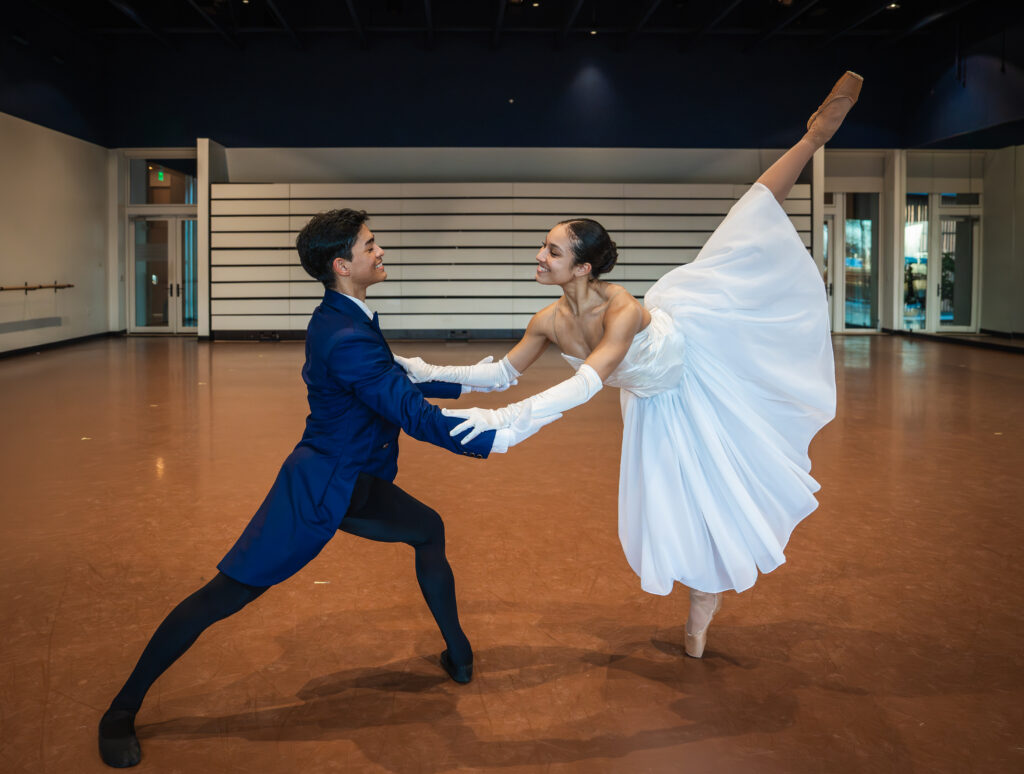
The ladies are wearing white gowns created by our costume designer, Caitlin Cotter. They have on long, white gloves. The tutus go just a little bit below their calves—it can’t be a complete gown or else you won’t see their pointework. The men are in midnight-blue tuxedos, which is what they originally wore back in the ’30s. It’s in a ballroom, and there’s a lavish, curtained backdrop to show the grandness of the space and mirror the beauty of the dancers.
What’s the importance of The Cotillion premiering alongside Rise and Flack?
We’re celebrating Black History Month. The purpose of these ballets is to let people know that we hear you, we see you, we know what’s going on in the world, and that art does reflect reality.
My goal is to create more classical ballets that are rooted in African American history. Classical ballet was always connected to Coppélia and Swan Lake, and as a young dancer growing up in these ballet companies where I was the minority, I felt that I was kind of putting on a white face to dance works that were not connected to my culture. I want to create more classical ballets that tell our stories.
The post Kevin Thomas’ <i>The Cotillion</i>, for Collage Dance, Honors a Black Coming-of-Age Tradition appeared first on Pointe Magazine.